The fastest way to blend streetwear with luxury is to build every outfit around one luxury anchor piece, balance proportions so volume is never competing on both top and bottom, and let your footwear or bag close the look with intention. That single formula covers the vast majority of the styling decisions you’ll ever face.
Three outfit templates to copy right now:
- Day casual: White graphic tee + tailored black trousers + Gucci or Bottega Veneta leather sneakers + minimal crossbody bag. Swap the tee for a hoodie in cooler weather.
- Smart casual: Oversized neutral hoodie + slim-cut trousers + leather loafers + a structured designer tote. Swap loafers for clean white luxury sneakers to dial down formality.
- Night out: Black joggers (premium fabric) + fitted blazer + statement designer boots + one logo-forward accessory (belt or bag). Swap the blazer for a luxe leather jacket to sharpen the edge.
Pro Tip: Keep obvious logos to one item per outfit. The rest of the look should speak through fit and fabric quality, not branding.
Table of Contents
- What makes the streetwear-luxury fusion actually work?
- How do you balance proportions and avoid looking overwhelmed?
- Eight outfit recipes you can copy right now
- How do you mix color, texture, and pattern without visual conflict?
- How do footwear and accessories anchor the whole look?
- What are the rules for mixing brands and managing logos?
- What are the most common mistakes when combining streetwear and luxury?
- Where should you shop for authentic luxury pieces in the US?
- How do you adapt the mix for different occasions?
- How do you care for mixed fabrics and luxury pieces?
- Key Takeaways
- Why fit and personal style will always beat brand-chasing
- Authenticated luxury anchors, sourced and shipped to you
- Useful sources and further reading
What makes the streetwear-luxury fusion actually work?
The one-luxury-item heuristic is the foundation: start with a solid streetwear base and add a single high-end piece that pulls everything up. Mixing price points this way, a basic tee with luxury sneakers, for example, reads as curated rather than confused. The key is that the luxury piece earns its place through quality, not just a logo.
Materials and construction are where the difference shows up in person. A Prada nylon jacket or a Balenciaga wool coat reads differently than a fast-fashion equivalent the moment someone stands next to you. Mixing textures like leather, silk, denim, and knit adds visual depth and signals that the outfit was assembled with thought. When the luxury-streetwear trend matured, it raised expectations for fabric quality across all price tiers. That means even your streetwear base pieces should feel considered.
Silhouette is the other pillar. Oversized and tailored pieces can absolutely coexist, but they need a clear logic. One relaxed element, one structured element. Never two competing volumes at the same time.
The 3-3-3 concept is a practical rule worth memorizing: limit obvious logos to one or two pieces, keep textural contrasts to three maximum, and use three levels of proportion (fitted, mid, and oversized) to create deliberate balance. It sounds technical, but in practice it just means your outfit has a clear visual hierarchy rather than competing focal points. Pair this with smart luxury buys that hold their value across seasons and you’ll build a wardrobe that works harder for you.
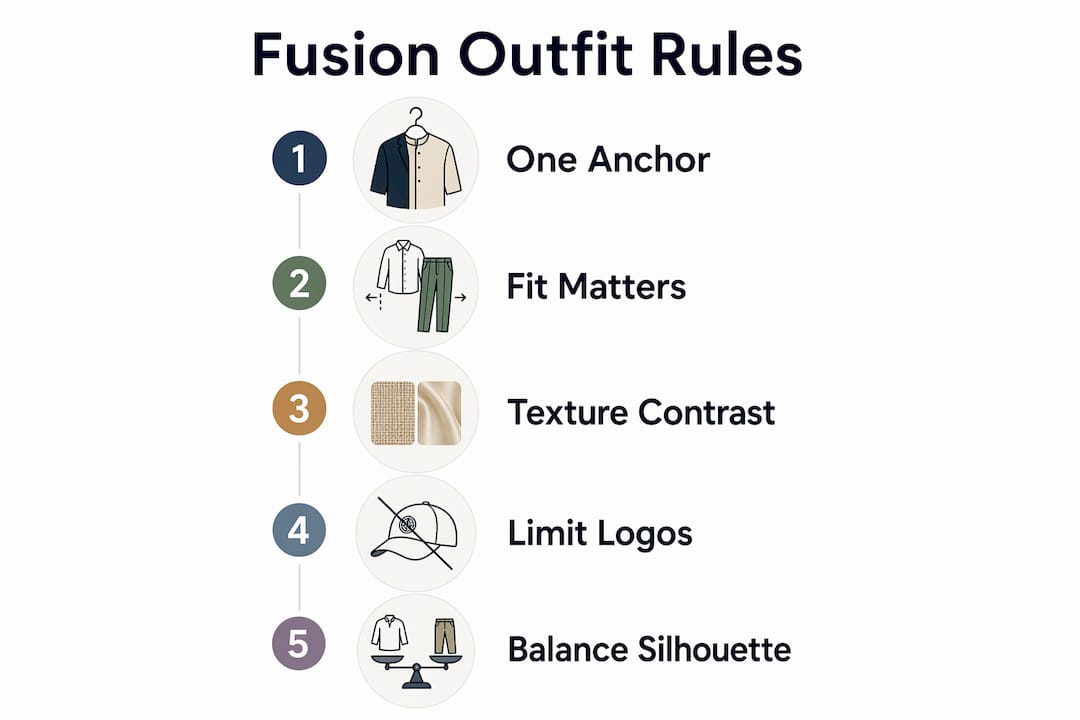
Pro Tip: Luxury outerwear, tailored trousers, premium sneakers, and structured bags are the four anchor categories worth investing in first. Everything else can be streetwear.
How do you balance proportions and avoid looking overwhelmed?
The main rule: if one element is oversized, the opposing element must be fitted or structured. Playing with proportions is what separates a cohesive high-low look from a sloppy one. Volume on top demands structure below, and vice versa.
Practical layering principles
- Oversized hoodie + slim trousers: The hoodie provides casual volume; the trousers keep the silhouette grounded. Add a structured coat on top to frame the whole look.
- Blazer over a graphic tee: The blazer is the structured element. Keep the tee untucked for a relaxed feel, but make sure the blazer’s shoulder seam sits correctly on your actual shoulder.
- Longline coat + joggers: The coat creates vertical length. Joggers work here because the coat’s structure compensates for their relaxed cut. Footwear must be clean and minimal.
- Cropped jacket + wide-leg trousers: The jacket is fitted; the trousers carry the volume. This is a bold proportion play that works best with a simple tee underneath and a low-profile sneaker.
- Fitted turtleneck + oversized denim jacket: The turtleneck anchors the silhouette; the denim jacket adds casual volume without losing shape.
Mirror test checklist
Before you leave the house, run through these five checks:
- Length: Does the hem of your top hit at a flattering point relative to your trousers? Avoid two pieces that end at the same mid-thigh point.
- Shoulder line: On any structured piece (blazer, coat), the shoulder seam should sit at your actual shoulder, not drooping down your arm.
- Hem relationship: If your top is long, your trousers should be slim. If your trousers are wide, your top should be shorter or tucked.
- Sleeve balance: Rolled sleeves on a blazer or overshirt add intentionality. A single roll to mid-forearm reads polished; bunched sleeves read careless.
- Shoe-to-trouser gap: Cropped trousers with clean sneakers or loafers look deliberate. The same trousers with chunky boots can look heavy unless the rest of the outfit is minimal.
Before/after examples:
- Oversized hoodie + wide-leg joggers + chunky sneakers: Everything is the same volume and weight. Fix: swap the chunky sneakers for slim leather trainers and tuck the front of the hoodie slightly.
- Blazer + slim jeans + dress shoes: Too formal on the bottom, too casual on top. Fix: swap the dress shoes for minimalist white leather sneakers and roll the blazer sleeves once.
Pro Tip: A single tuck, a sleeve roll, or a shoe swap can shift an outfit from “thrown together” to “intentional” in under 30 seconds.
Eight outfit recipes you can copy right now
These templates are built around the one-luxury-anchor rule. Each lists the core pieces, the luxury anchor, footwear, and two swap options.
“The strongest mixes usually start with one luxury statement piece and build around it; mixing price points gives an authentic curated look.”
Outfit 1: Classic day casual
White graphic tee, slim dark-wash jeans, luxury anchor: Bottega Veneta leather sneakers, minimal leather crossbody bag. Why it works: The sneakers carry all the luxury weight; everything else is clean and neutral. The bag adds a second premium touch without competing. Swaps: Replace the tee with a Henley for a slightly more polished feel. In winter, add a camel wool overcoat.
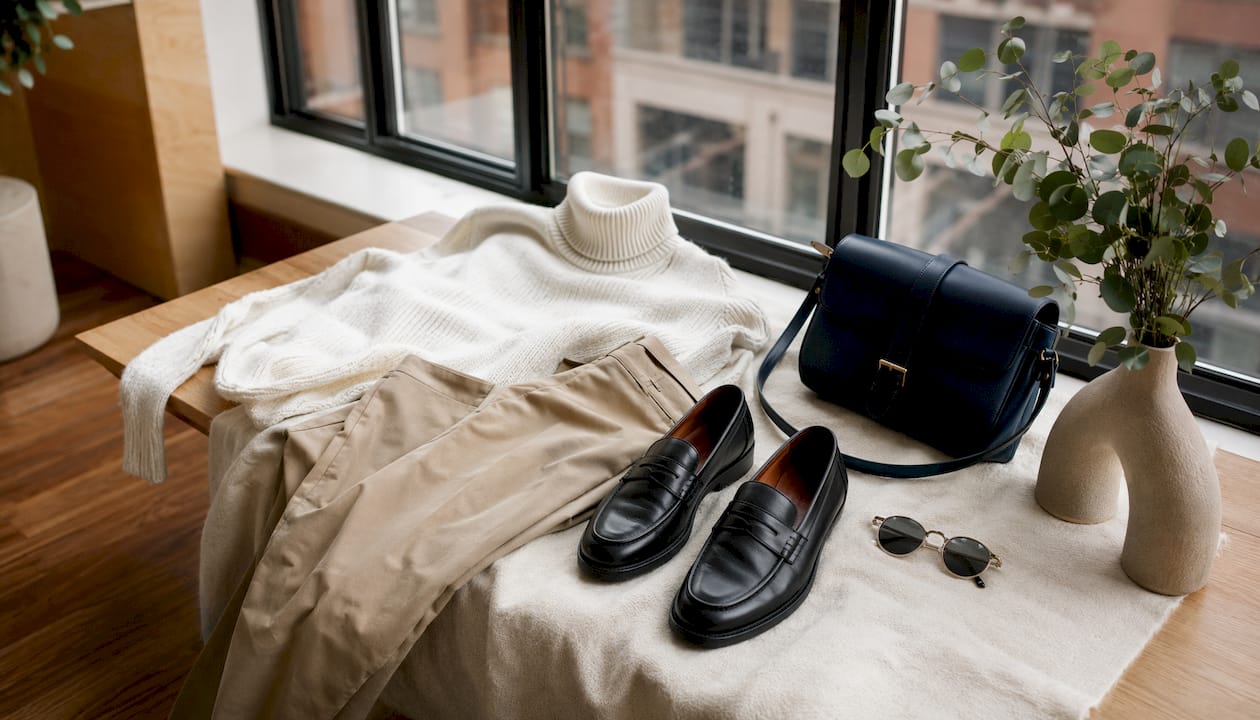
Outfit 2: Hoodie luxe
Oversized neutral hoodie, tailored charcoal trousers, luxury anchor: Saint Laurent structured tote, white leather sneakers. Why it works: The hoodie and trousers create a deliberate volume contrast. The bag is the single luxury signal. Swaps: Swap the tote for a belt bag to go more casual. In summer, replace the trousers with slim chinos.
Outfit 3: Blazer over streetwear
Graphic tee, black joggers (premium fabric), luxury anchor: slim-cut Prada blazer, clean white sneakers. Why it works: The blazer does all the heavy lifting. The joggers and tee stay simple so the blazer reads as a statement. Swaps: Swap the joggers for slim trousers to dress up for a creative office. Add a watch for a night-out version.
Outfit 4: Luxe outerwear
Plain black hoodie, slim jeans, luxury anchor: Balenciaga or Gucci leather jacket, minimalist sneakers or ankle boots. Why it works: The leather jacket is the focal point. Everything underneath is intentionally quiet. Swaps: Replace the hoodie with a fitted turtleneck for a sharper silhouette. Swap sneakers for Chelsea boots in fall.
Outfit 5: Tailored trousers anchor
White tee, luxury anchor: Valentino wide-leg tailored trousers, fitted denim jacket, loafers. Why it works: The trousers are the luxury anchor and carry the proportion play. The denim jacket adds casual texture. Swaps: Replace the denim jacket with a structured blazer for smart-casual events. Swap loafers for leather sneakers on weekends.
Outfit 6: Designer sneaker focus
Plain crewneck sweatshirt, slim black trousers, luxury anchor: Gucci or Balenciaga statement sneakers, minimal leather belt. Why it works: Sneakers as anchor is a proven formula since collaborations like Dior x Jordan normalized high-end footwear in formal contexts. Swaps: Swap the sweatshirt for a silk button-down to shift the formality. Add a structured bag for evening.
Outfit 7: Night-out edge
Black slim joggers, fitted black turtleneck, luxury anchor: structured Chanel or Saint Laurent bag, heeled ankle boots. Why it works: The monochrome palette lets the bag stand out. The turtleneck adds polish without losing the streetwear silhouette. Swaps: Replace the turtleneck with a satin slip top for a warmer night. Swap boots for strappy heeled sandals in summer.
Outfit 8: Smart casual for creative workplaces
Oversized linen shirt (tucked loosely), slim trousers, luxury anchor: Prada loafers or leather mules, minimal watch. Why it works: The linen shirt keeps the relaxed streetwear energy; the loafers and watch signal precision. Swaps: Add a knit vest over the shirt for fall. Swap the loafers for clean white sneakers on casual Fridays.
Pro Tip: Invest in luxury shoes for every occasion before any other luxury category. Footwear changes the perceived formality of an entire outfit faster than any other single piece.
How do you mix color, texture, and pattern without visual conflict?
Pick one visual focus per outfit: color, pattern, or texture. Trying to lead with all three at once is where most high-low looks fall apart.
Color palettes that consistently work:
- Neutral base + one accent: Black, white, and gray as the base with a single color accent (burgundy bag, cobalt sneakers). The accent reads as intentional rather than chaotic.
- Tonal layering: Different shades of the same color family (cream tee, sand trousers, camel coat) create depth without visual noise. A great approach for mixing different fabric weights.
- Monochrome with texture contrast: All-black or all-navy outfits work when the pieces differ in texture. Matte cotton hoodie + glossy leather jacket + suede boots is a three-texture monochrome that reads sophisticated.
Dos and don’ts for mixing fabrics:
- Do pair denim with silk or satin for a high-low texture contrast that feels deliberate.
- Do mix knit with leather. It’s one of the most reliable pairings in the high-low wardrobe.
- Don’t stack two shiny or two heavily textured fabrics in the same outfit.
- Don’t mix more than two patterns. One pattern piece, everything else solid.
- Do use technical fabrics (nylon, ripstop) as a base layer under structured luxury pieces.
Texture pairing reference
| Base fabric | Best luxury pairing | Why it works |
|---|---|---|
| Cotton hoodie | Wool or cashmere coat | Weight contrast creates visual interest |
| Denim jacket | Silk or satin trousers | Casual vs. refined creates high-low tension |
| Knit sweater | Leather trousers or skirt | Soft vs. structured is a classic pairing |
| Technical nylon | Tailored blazer | Sporty base elevated by sharp structure |
| Graphic tee | Tailored wide-leg trousers | Graphic energy grounded by clean tailoring |
How do footwear and accessories anchor the whole look?
Footwear is the single most powerful anchor in a mixed aesthetic. Investing in sneakers and statement shoes often delivers more visual impact than a luxury top because footwear defines the outfit’s formality register from the ground up. Choose one pair that sets the tone, then build the rest of the outfit around that decision.
Footwear categories and when to use them:
- Minimalist luxury sneakers (think clean leather trainers from Gucci, Prada, or Bottega Veneta): the most versatile anchor. They work with joggers, tailored trousers, and everything between. Minimalist, well-made luxury sneakers tend to outlive trends and provide a longer-lasting anchor than overly trendy chunky trainers.
- Statement trainers (bold colorways, collaborative designs): use these when the rest of the outfit is deliberately quiet. One statement shoe, everything else neutral.
- Ankle boots and Chelsea boots: push the formality up a notch. Pair with slim trousers or joggers for a sharp high-low contrast.
- Loafers: the smartest casual-to-formal bridge in the wardrobe. A leather loafer with joggers reads intentional; the same loafer with tailored trousers reads polished.
Accessories: where to splurge and where to keep it casual:
- Splurge on a structured bag (tote, crossbody, or mini bag from Chanel, Valentino, or Saint Laurent). A single quality bag elevates even the most casual outfit.
- A luxury accessories styling guide can help you identify which pieces deliver the most impact per dollar.
- Keep streetwear accessories (caps, socks, lanyards) affordable. Their job is to add personality, not to signal investment.
- One premium watch or bracelet worn with casual pieces reads as confident restraint.
- Belts are underrated anchors. A quality leather belt from a recognized brand ties trousers and a tucked tee together with minimal effort.
Pro Tip: When budget is limited, prioritize footwear and one bag over any other luxury category. Those two pieces do the most work in a high-low outfit.
What are the rules for mixing brands and managing logos?
The core rule: limit obvious logos to one focal item. Let quality and fit carry the rest of the outfit. An outfit stacked with visible logos from multiple brands reads as brand-chasing rather than personal style. The 70/30 visual weight rule applies directly here: roughly 70% of the outfit should be clean or logo-free, with 30% carrying the brand statement.
Logo balance checklist:
- One logo-forward piece per outfit, maximum two.
- Scale matters: a small embossed logo on a bag reads differently than a large chest-print tee. Both can work, but not together.
- Avoid repeating the same brand logo across multiple pieces in one look (matching logo tee + logo cap + logo bag is too much).
- Monogram pieces (LV, Gucci GG, Burberry check) count as a logo. Treat them as your one focal item.
Integrating collaborations and limited-edition drops:
Streetwear culture values scarcity and limited-edition releases, and collaboration pieces (Supreme x Louis Vuitton, Dior x Jordan) carry their own visual weight. When wearing a collab piece, keep everything else in the outfit minimal and logo-free. The collab is the story; the rest of the outfit is the frame.
Two examples of low-key brand mixing that work:
- Black Balenciaga hoodie (small logo) + no-logo slim trousers + Gucci leather sneakers. Two brands, neither competing.
- Plain white tee + Saint Laurent structured bag + no-logo straight-leg jeans + clean white sneakers. The bag is the only brand signal.
For deeper context on streetwear aesthetics and collectible pieces, understanding what makes a drop culturally significant helps you style it with more confidence.
What are the most common mistakes when combining streetwear and luxury?
Most high-low styling mistakes come down to four problems: over-branding, poor fit, too many competing textures, and mismatched formality. Here’s the quick-fix for each.
- Over-branding: Three or more visible logos in one outfit. Fix: remove the logo cap or swap the logo tee for a plain one. Keep one brand signal.
- Poor fit on the luxury piece: A blazer with drooping shoulders or trousers that pool at the ankle undermine the entire look. Fix: get the luxury piece tailored. Most dry cleaners and local tailors in the US can take in a blazer or hem trousers for $20–$40. The investment is worth it.
- Too many competing textures: Leather jacket + sequin top + textured knit trousers. Fix: pick two textures maximum and let one be a neutral base.
- Mismatched formality: Dress shoes with a hoodie and joggers, or flip-flops with a tailored blazer. Fix: align footwear formality with the most structured piece in the outfit, not the most casual.
- Ignoring proportion: Oversized top + wide-leg trousers + chunky sneakers. Everything is the same volume. Fix: swap one element for something fitted or structured.
- Wearing a luxury piece that doesn’t fit your personal style: Buying a piece because it’s trending rather than because it works with what you already own. Fix: before purchasing, check that the piece pairs with at least three items already in your wardrobe.
Fit problems are the single most common reason high-low mixes fail. A $50 tee that fits perfectly reads better than a $500 designer piece that doesn’t. Affordable tailoring is available at most dry cleaners and independent tailors across the US, and it’s one of the highest-return investments in your wardrobe.
Where should you shop for authentic luxury pieces in the US?
Prioritize authenticated retailers or platforms with clear return policies, shipping insurance, and provenance documentation. In the US, that means department stores with luxury floors (Saks Fifth Avenue, Neiman Marcus), brand flagship stores, and authenticated online platforms that provide serial numbers, receipts, and condition reports.
Authentication checklist before you buy:
- Request the original receipt or proof of purchase.
- Check serial numbers and date codes against the brand’s known format.
- Inspect stitching, hardware weight, and lining quality. Luxury goods have consistent, tight stitching with no loose threads.
- Verify the seller’s return policy before checkout. Reputable platforms offer at least a 14-day return window.
- For online purchases, confirm that shipping insurance is included or available.
Practical red flags:
- Prices that are dramatically below market value with no explanation.
- Sellers who refuse to provide close-up photos of hardware, stitching, and date codes.
- No return policy or “all sales final” on a high-ticket item.
- Packaging that doesn’t match the brand’s known presentation (dust bags, boxes, authenticity cards).
The luxury fashion shopping workflow matters as much as the piece itself. Knowing what to check before you click “buy” protects your investment and your wardrobe.
Pro Tip: Naiseshopper offers an authenticity guarantee, personal shopper assistance across the US, and shipping insurance on every order. For fashion enthusiasts who want authenticated luxury anchors at discounted prices, it removes the guesswork from sourcing.
How do you adapt the mix for different occasions?
The key decision for any occasion is footwear and tailoring level. Choose those two elements to define the context, then add streetwear pieces for personality. The same hoodie can read casual, smart casual, or creative-office depending entirely on what it’s paired with below and on top.
Day casual:
- Graphic tee or hoodie + slim jeans + minimalist luxury sneakers + crossbody bag.
- Swap: replace the sneakers with loafers to shift toward smart casual.
- Avoid: heavy logos or overly distressed denim if you’re heading anywhere beyond a coffee shop or weekend errand.
Smart casual (dinner, gallery opening, casual date):
- Tailored trousers + premium knit or fitted turtleneck + leather loafers or clean boots + structured bag.
- Swap: add a blazer over the knit to push toward business casual.
- Avoid: athletic sneakers or hoodies with visible wear.
Creative office (fashion, media, design industries):
- Slim trousers + oversized linen shirt (tucked) + luxury loafers or leather sneakers + minimal watch.
- Swap: add a tailored vest or structured blazer for client meetings.
- Avoid: heavy logos, overly casual joggers, or anything that reads as gym-adjacent.
Night out or events:
- Slim black trousers or joggers (premium fabric) + fitted blazer or leather jacket + statement boots or heeled sneakers + one luxury bag.
- Swap: replace the blazer with a satin or silk top for a warmer, more dressed-up feel.
- Avoid: heavy logos at formal events. Let the silhouette and fabric quality do the work.
How do you care for mixed fabrics and luxury pieces?
Caring for a mixed wardrobe means treating each fabric on its own terms. Luxury pieces and streetwear staples often have very different care requirements, and washing them incorrectly is the fastest way to ruin an investment.
General care rules by fabric:
- Wool and cashmere coats: dry clean only, or hand wash in cold water with a wool-specific detergent. Never machine wash or tumble dry. Store folded, not hung, to prevent stretching.
- Leather jackets and bags: wipe with a damp cloth after wear. Condition with a leather conditioner every few months. Store in a dust bag away from direct sunlight. Never use water or alcohol-based cleaners on untreated leather.
- Silk and satin pieces: hand wash in cold water with a gentle detergent, or dry clean. Never wring. Lay flat to dry. Iron on the lowest setting with a cloth between the iron and the fabric.
- Denim: wash inside out in cold water to preserve color. Air dry rather than tumble dry to maintain shape. Luxury denim (raw denim, selvedge) benefits from infrequent washing.
- Technical fabrics (nylon, ripstop): machine wash cold on a gentle cycle. Air dry. Avoid fabric softener, which can degrade water-resistant coatings.
- Cotton hoodies and tees: machine wash cold, tumble dry low. Wash graphic tees inside out to preserve print quality.
Storage tips for luxury pieces:
- Store leather goods in dust bags, stuffed with tissue paper to maintain shape.
- Hang structured blazers and coats on wide, padded hangers to preserve shoulder shape.
- Keep luxury sneakers in their original boxes or clear shoe boxes with silica gel packets to prevent yellowing.
- Rotate your pieces. Wearing the same luxury item every day accelerates wear. Give leather and structured pieces at least one day of rest between wears.
For detailed guidance on organizing luxury accessories and proper storage, a structured system protects your investment long-term.
Key Takeaways
Blending streetwear with luxury works best when you build every outfit around one luxury anchor, balance proportions deliberately, and let footwear define the occasion.
| Point | Details |
|---|---|
| One luxury anchor rule | Build each outfit around a single high-end piece; everything else can be streetwear. |
| Proportion balance | If one element is oversized, the opposing element must be fitted or structured. |
| Footwear as anchor | Shoes define an outfit’s formality register faster than any other single piece. |
| Logo discipline | Limit obvious logos to one or two pieces per outfit; let fit and fabric carry the rest. |
| Naiseshopper for sourcing | Naiseshopper offers authenticated luxury anchors at discounted prices with personal shopper assistance and shipping insurance across the US. |
Why fit and personal style will always beat brand-chasing
The conventional wisdom in high-low styling tends to focus on which brands to mix. That framing misses the point. The outfits that actually turn heads are built around fit, proportion, and a clear personal aesthetic, not a roster of recognizable labels.
There’s a real difference between wearing luxury and wearing it well. A perfectly tailored blazer from a lesser-known brand over a clean graphic tee reads more sophisticated than a logo-heavy designer piece that doesn’t fit. The luxury-streetwear fusion works precisely because it gave people permission to stop dressing for brand recognition and start dressing for personal expression. That shift, accelerated by collaborations that brought streetwear credibility into luxury houses, changed what “dressed well” actually means.
The practical implication: before you add any new luxury piece to your wardrobe, ask whether it fits your existing pieces and your actual lifestyle. A Chanel bag is a brilliant investment if you wear it three times a week. It’s a waste if it sits in a dust bag because it doesn’t match how you actually dress. Personal style is a system, not a collection of individual trophies.
For more on building that system, the layering luxury fashion guide covers how to stack pieces with intention rather than just adding more to the outfit.
Authenticated luxury anchors, sourced and shipped to you
Knowing the rules is one thing. Finding the right luxury anchor piece at a price that makes sense is another challenge entirely.
Naiseshopper is built for exactly this: authenticated designer pieces from Gucci, Chanel, Prada, Valentino, Bottega Veneta, Saint Laurent, and Balenciaga, available at discounted prices with an authenticity guarantee on every item. Every purchase comes with shipping insurance and the option to use a personal shopper who can help you source specific pieces across the US. If you’ve been looking for a luxury anchor to build your high-low wardrobe around, an Emporio Armani shirt is a sharp, versatile starting point that pairs with everything from slim jeans to tailored trousers. Browse the authenticated luxury collections to find the anchor piece that fits your style and your wardrobe.
Useful sources and further reading
- Guide to Streetwear Fashion: 4 Tips for Styling Streetwear — MasterClass: proportion rules, the one-luxury-item heuristic, and the 3-3-3 concept.
- When Dior Met Streetwear: The High Fashion Merge That Stuck — WEAR2AM: how luxury-streetwear collaborations normalized sneakers in formal contexts.
- Mixing Streetwear With High Fashion the Right Way — JustLuxe: texture mixing and fabric quality guidance.
- Mastering the Art of Mixing High-End Fashion with Streetwear — JoJaxs: the values-over-logos argument for authentic high-low styling.
- Best Ways to Mix High-End Fashion with Streetwear Style — 22Ahead: stepwise outfit-building guidance.
- How Streetwear Became Stylish as Luxury Brands Adopted a More Casual Approach — The National: cultural and industry context on the luxury-streetwear convergence.
- Exclusive Streetwear Aesthetics Explained for Collectors — Native 303 Apparel: streetwear curation and collectible drop culture.
- How to Layer Luxury Fashion for a Sleek Look — Naiseshopper: layering principles that complement the high-low mixing guide.