The idea that the best luxury finds live behind velvet ropes at a Paris boutique or a Rodeo Drive flagship is rapidly becoming outdated. Today, rare Chanel flaps, limited-edition Bottega Veneta pieces, and coveted Prada styles are just as likely to surface on a global online marketplace as they are in any physical store. And here’s what makes it even more compelling: you can get them authenticated, shipped internationally in under a week, and often at prices that beat local retail. This guide breaks down exactly why shopping international luxury platforms is one of the smartest moves you can make in 2026.
Table of Contents
- Global access: Discover rare and exclusive luxury items without borders
- Uncompromising authentication: How global luxury platforms protect your investment
- Price and value: Why global platforms deliver savings without sacrifices
- Sustainability and responsibility: Join the new era of conscious luxury
- Why the future of luxury is borderless—and what most guides miss
- Shop authenticated global luxury—exclusive deals await
- Frequently asked questions
Key Takeaways
| Point | Details |
|---|---|
| Access rare finds | International marketplaces connect you with exclusive and limited-edition luxury items beyond local reach. |
| Guaranteed authenticity | Multi-step authentication processes protect your investment and minimize counterfeit risk. |
| Save on luxury | Global competition and growing resale markets make high-end items more affordable for savvy buyers. |
| Choose conscious luxury | Shopping globally supports the circular economy, reduces waste, and promotes sustainable fashion choices. |
Global access: Discover rare and exclusive luxury items without borders
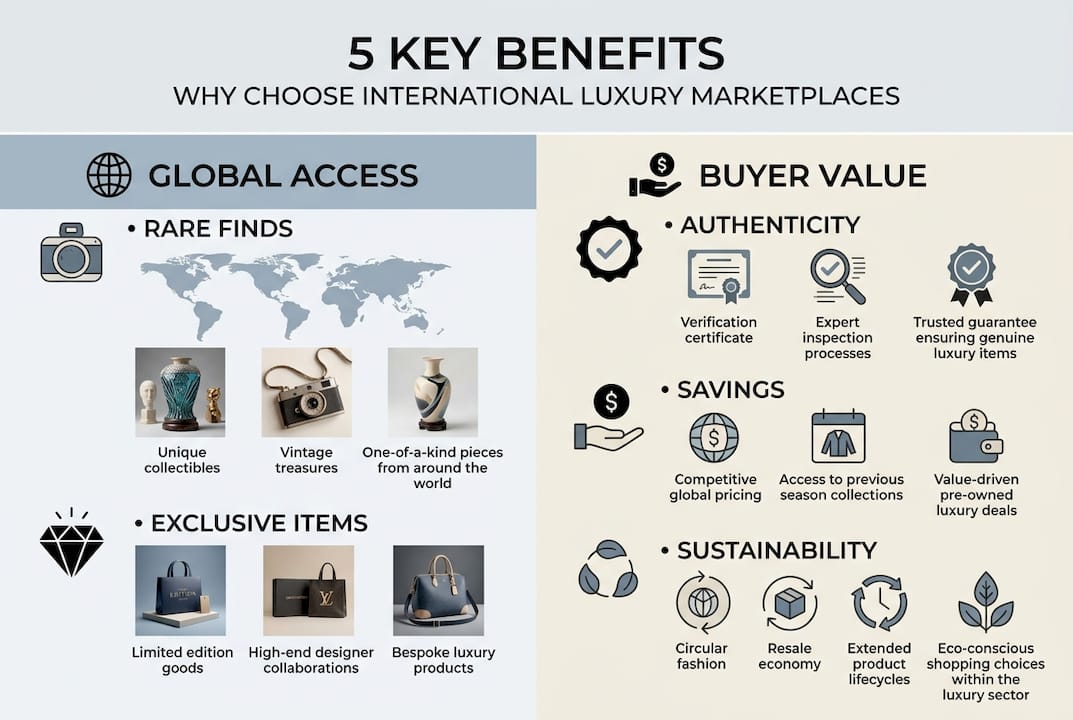
When you shop locally, you’re limited to whatever your regional boutiques and department stores have decided to stock. International luxury marketplaces flip that equation entirely. These platforms connect you directly to boutique inventories, consignment specialists, and private sellers across dozens of countries, all in one place.
That means a limited-edition Gucci bag released only in Japan, or a Saint Laurent style that sold out in the US months ago, can still land in your hands. Rare and limited-edition items are listed constantly by sellers in different markets, creating a rolling inventory that no single store could ever match. The international luxury benefits are real and tangible, not just theoretical.
Logistics have caught up with demand, too. Global logistics enable 3-7 day shipping, connecting shoppers worldwide to rare finds from international sellers without the need for travel. That’s a game-changer for anyone who has spent years hunting a specific piece.
Most frequently sourced luxury items internationally
| Item type | Why sourced globally |
|---|---|
| Limited-edition handbags | Regional exclusives, sold-out locally |
| Vintage watches | Rare references, specialist sellers |
| Runway apparel | Archive pieces, boutique overstock |
| Collectible shoes | Colorways unavailable in home market |
| Accessories and scarves | Brand-specific regional releases |
Here’s what sets global platforms apart from local resale:
- Access to boutique overstock from Europe, Asia, and the Americas
- Listings from private collectors and estate sales worldwide
- Rotating inventory updated daily across multiple time zones
- Filters by brand, size, condition, and region for precision searching
Pro Tip: Use locale or region filters on international platforms to surface inventory that local shoppers often overlook entirely. A quick filter for European sellers can reveal styles that never officially launched in the US market.
Uncompromising authentication: How global luxury platforms protect your investment
Access to rare pieces is exciting, but it means nothing if you can’t trust what you’re buying. This is where top international marketplaces have invested heavily, and the results are impressive.
Strict authentication via boutique vetting, expert quality control, AI tools, post-purchase verification, and buyer guarantees significantly reduce counterfeit risk across leading platforms. The approach varies by model, but the commitment to quality is consistent.
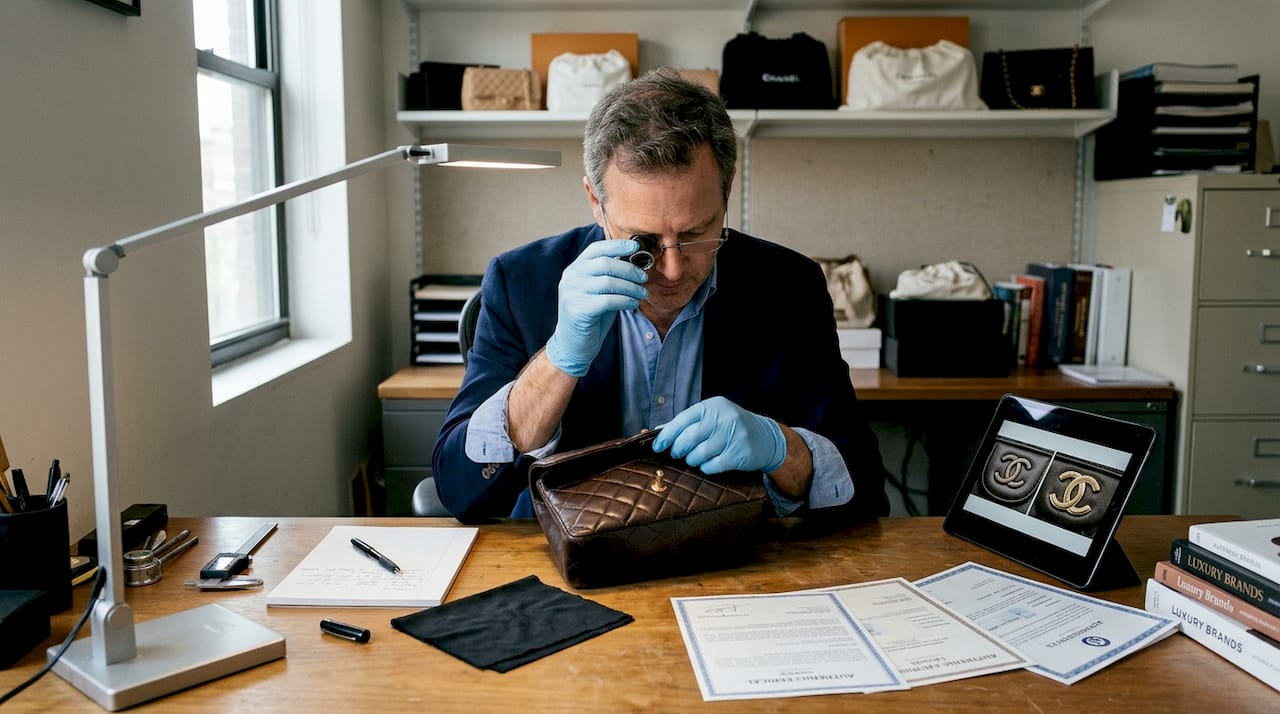
Here’s how three major marketplace models compare:
| Platform model | Authentication method | Buyer protection |
|---|---|---|
| Boutique marketplace (e.g., Farfetch) | Vetted boutique partners, no direct inventory | Partner accountability, returns |
| Consignment (e.g., The RealReal) | In-house experts, warehouse QC | Money-back guarantee |
| Peer-to-peer (e.g., Vestiaire Collective) | Seller listing, platform verification | Dispute resolution, refunds |
Understanding luxury authentication explained helps you ask the right questions before you buy. Here’s what a standard authentication journey looks like:
- Seller submits item with provenance details and photos
- Platform experts review hardware, stitching, serial numbers, and materials
- AI tools cross-reference known counterfeit markers
- Item is approved, photographed, and listed with condition notes
- Post-purchase, buyer receives certification documentation
Knowing why to authenticate designer goods is step one. Knowing how to verify that a platform actually does it well is step two. Always look for platforms that offer post-purchase guarantees and transparent certification.
Pro Tip: After receiving your purchase, request a post-purchase certificate if one isn’t included automatically. This document protects your investment and adds resale value if you decide to sell later.
Price and value: Why global platforms deliver savings without sacrifices
Once you’re confident in authenticity, the financial case for global platforms becomes hard to ignore. The numbers tell a compelling story.
The secondhand luxury resale market is growing 10% annually, projected to reach $360 billion by 2030, three times faster than primary luxury retail. And 80% of shoppers on these platforms cite affordability as a primary driver. That’s not a niche trend. That’s a structural shift in how luxury is bought and sold.
Here’s where the savings actually come from:
- International arbitrage: Prices for the same item vary significantly by country due to taxes, import duties, and local demand
- Reduced retail markups: Resale and consignment bypass the boutique premium entirely
- Outlet and overstock access: Global platforms surface end-of-season finds from boutiques worldwide
- Currency fluctuation: A favorable exchange rate can add meaningful savings on top of an already competitive price
For a deeper look at how the market works, luxury resale insights break down the mechanics behind pricing and demand.
Beyond the immediate savings, there’s an investment angle worth considering. Authenticated pieces purchased through vetted global channels retain value better than those bought without documentation. A Chanel Classic Flap with full authentication history is worth more at resale than an identical bag without it. The designer deals guide covers this in detail.
Pro Tip: Set price alerts on international platforms and monitor currency exchange rates. A 5-10% swing in your favor, combined with a competitive listing price, can result in significant savings on a single purchase.
Sustainability and responsibility: Join the new era of conscious luxury
Beyond financial value, the new generation of luxury buyers wants their purchases to reflect their values. Global resale marketplaces are uniquely positioned to deliver on that expectation.
Luxury goods are built to last decades. When they end up in landfills instead, that’s a failure of the system, not the product. Resale platforms fix this by extending the life cycle of every piece, creating a circular economy where items move from one appreciative owner to the next.
“The circular economy in luxury isn’t a compromise. It’s an upgrade. Buying authenticated resale means you’re getting a better product, at a better price, with a better story.”
Sustainability appeals to 40-60% of millennials and Gen Z shoppers, and platforms are actively promoting wardrobe detox programs to make conscious luxury more accessible. This isn’t just marketing. It’s a measurable shift in purchasing behavior.
Key environmental benefits of choosing authenticated resale:
- Extends the usable life of high-quality goods by years or decades
- Reduces demand for new production and associated carbon emissions
- Diverts luxury items from landfill through active resale channels
- Encourages mindful purchasing over impulse buying
- Supports a pre-loved fashion guide approach to building a wardrobe
The appeal is particularly strong among younger affluent shoppers who see resale not as a budget compromise but as a smarter, more intentional way to build a luxury wardrobe. Owning a vintage Valentino with a documented history feels more meaningful than buying something off a shelf.
Why the future of luxury is borderless—and what most guides miss
Most articles stop at the obvious: better prices, wider selection, sustainability. But the real story is more nuanced, and it’s worth saying directly.
The most forward-thinking platforms are already integrating digital product passports (DPPs) for lifecycle tracking and authenticity verification. DPPs are emerging as the next standard for luxury resale, giving buyers a verifiable ownership history tied to the item itself, not just a paper certificate.
There’s also a geographic dimension that most guides ignore. US shoppers skew heavily toward affordability, with 87% citing price as a primary motivator, while European buyers tend to prioritize curation and provenance. Neither approach is wrong, but knowing which type of platform aligns with your priorities matters.
Here’s what we think most shoppers still miss: exclusivity in luxury is no longer about price alone. It’s about access to rare, authenticated pieces with documented histories. A bag you found through a global marketplace, authenticated by experts, with a verifiable ownership trail, is arguably more exclusive than one pulled off a boutique shelf. Check the bag authenticity checklist before your next purchase to make sure you’re asking the right questions.
The future isn’t just cheaper luxury. It’s smarter, more transparent luxury.
Shop authenticated global luxury—exclusive deals await
Everything covered in this guide points to one clear opportunity: the global luxury market is more accessible, more trustworthy, and more exciting than it has ever been. You don’t need to travel to Paris or Tokyo to find rare, authenticated designer pieces at prices that make sense.
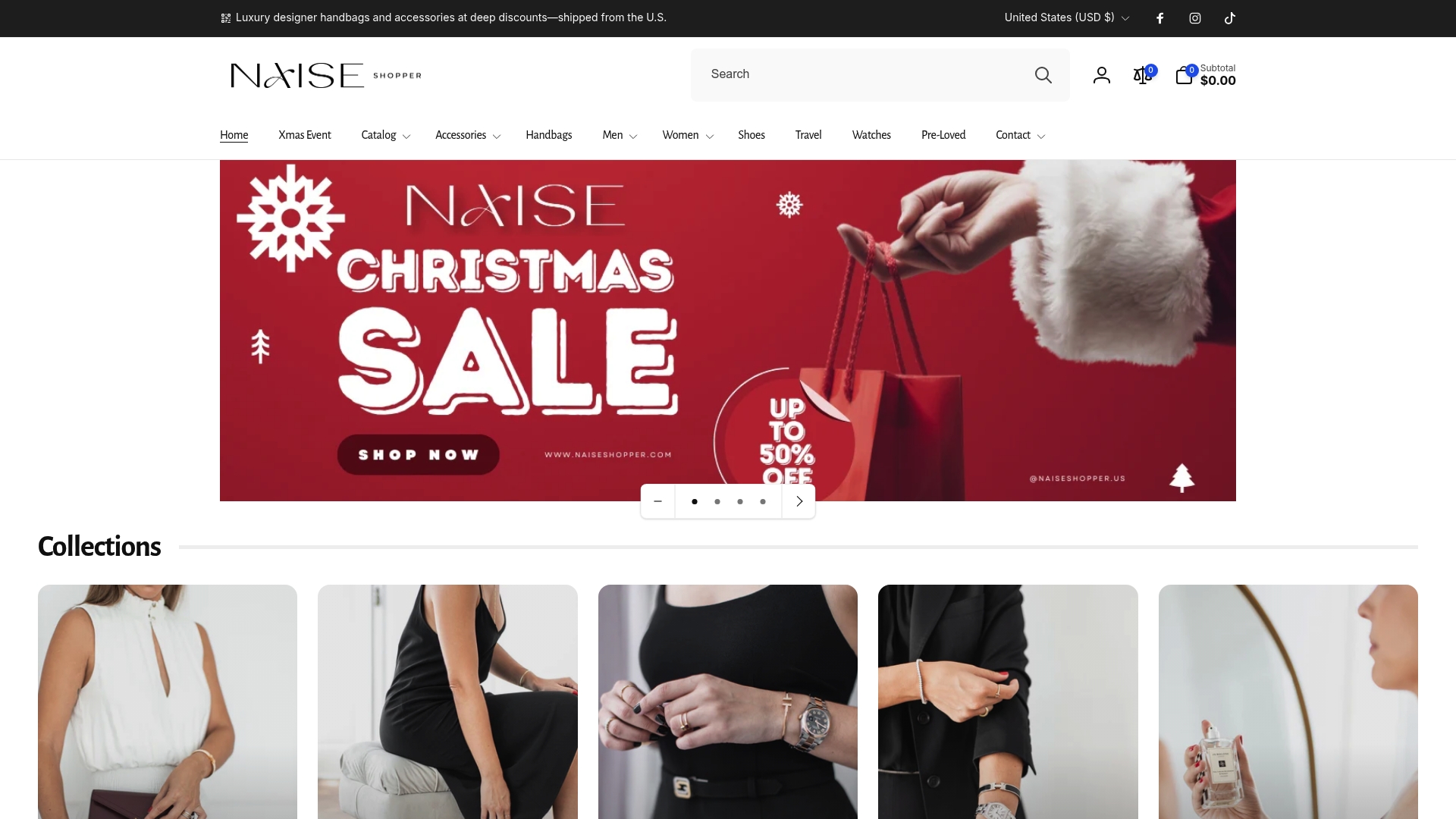
At Naise Shopper, we curate authenticated luxury from the world’s most coveted brands, with international shipping, flexible payment options, and personal shopper support. Whether you’re eyeing the iconic Dior black leather oxfords or the effortlessly chic Alexander McQueen gray boots, every piece is verified and ready to ship. Start exploring today.
Frequently asked questions
How can I be sure my designer item is authentic when buying internationally?
Top international luxury marketplaces use tiered authentication combining boutique experts, AI tools, and post-purchase guarantees to minimize counterfeit risk. Always look for platforms that issue buyer certificates and offer money-back protection.
What are the shipping times and risks for international luxury purchases?
Most reputable platforms offer 3-7 day global shipping with full tracking and shipping insurance, making cross-border purchases as secure as buying locally.
Are prices better on international marketplaces versus local boutiques?
Yes. The resale market growing to $360B by 2030 reflects strong demand and competitive pricing, with 80% of buyers citing affordability as a key reason they shop internationally.
How does buying resale support sustainability?
Resale extends the life of luxury goods, reduces production demand, and diverts items from landfill. 40-60% of Gen Z and millennials actively cite sustainability as a reason they choose resale over new retail.