Choose one designer statement that reflects your wardrobe, fits its occasion, and passes a quick three-check test. That single discipline separates a wardrobe that feels curated from one that feels cluttered. According to designers interviewed by Real Simple, the one statement piece rule works because a single focal item reads intentional; multiple competing anchors read chaotic.
The three non-negotiable checks:
- Visible and flattering at conversational distance. The piece should register clearly without requiring explanation.
- Appropriate for the event tone. A sculptural cuff that works at a gallery opening can derail a board meeting.
- Comfortable for at least two hours. If you’d remove it by dessert, it isn’t working for you.
Your five-minute decision checklist:
- Try it on and take a photo. Does it read as the outfit’s anchor, or does it compete with everything else?
- Name one specific occasion it will anchor. If you can’t, pass.
- Run the durability check: inspect stitching, hardware weight, and material feel before committing.
Key Takeaways
Choosing a great statement designer piece comes down to one rule: one anchor per outfit, chosen for fit, occasion, and lasting quality.
| Point | Details |
|---|---|
| One statement at a time | A single focal piece reads intentional; multiple anchors compete and cancel each other out. |
| Three-check rule | Confirm the piece is visible at distance, fits the event tone, and stays comfortable for two hours. |
| Investment categories | Timeless bags, classic coats, and expressive shoes hold value longest; skip trend-driven pieces at full price. |
| Authenticate before buying | Inspect hardware, stitching, lining, and serial numbers; use a reputable authentication service for pre-owned. |
| Naiseshopper | Offers authenticated pieces from Chanel, Gucci, Prada, and more at discounted prices with guaranteed authenticity. |
Table of Contents
- What actually counts as a statement designer piece
- How to choose statement designer pieces: the concrete selection criteria
- Styling techniques and outfit formulas that let one designer statement shine
- Designer categories and editor-backed investment picks
- How to buy smart and make statement pieces last
- Balance and pairing rules: how many statements at once
- Seasonal and occasion guidance: when to wear which statement items
- Investment vs. trend: when to splurge and when to skip
- Budgeting and cost expectations for statement designer pieces
- How to evaluate quality and craftsmanship in designer pieces
- Integrating statement pieces with your existing wardrobe
- The case for buying fewer, bolder, better pieces
- Authenticated designer statements, curated for you at Naiseshopper
- Sources
What actually counts as a statement designer piece
A statement piece is the single visual anchor that carries an outfit. It does the heavy lifting so everything else can stay quiet. Scale, singularity, and narrative function define it, not price.
A Max Mara camel coat worn over a white tee and straight-leg trousers is a statement. A Bottega Veneta Jodie bag in cloud-green intrecciato leather is a statement. A pair of Jimmy Choo crystal-embellished mules on an otherwise minimal look is a statement. What they share: each one is the first thing your eye lands on, and the rest of the outfit exists to frame it.
Price alone doesn’t make something a statement. A $40 vintage brooch pinned to a lapel can anchor a look just as decisively as a four-figure Prada Re-Edition bag. What matters is emotional resonance and the role the piece plays in the outfit’s visual hierarchy.
How to choose statement designer pieces: the concrete selection criteria
Repeatable criteria make the difference between an impulse buy and a piece you wear for a decade. Work through this checklist in-store or online before committing.
- Scale calibrated to your frame. A chandelier earring that grazes the shoulder on a 5’10" frame can overwhelm a petite one. The statement jewelry buying guide from Sophia Jewelers defines five core categories (cocktail ring, drop earring, bib necklace, wide cuff, tennis bracelet) and gives scale rules for each.
- Silhouette fit. A voluminous Balenciaga puffer reads bold-intentional on a slim silhouette; on a fuller frame it can add unwanted bulk. Try the piece against your actual body, not a hanger.
- Occasion register. Match the piece to the dress code. Black-tie favors architectural earrings or a couture cuff; business calls for restrained sculptural accents; casual allows chunky rings or vivid color.
- Material and construction. Full-grain leather, high-thread-count fabrics, and weighty hardware signal longevity. Thin seams and light clasps signal the opposite.
- Function and comfort. A bag that won’t close properly or shoes that pinch at the toe box are not statement pieces. They’re problems.
- Versatility across your wardrobe. Can you name three outfits it anchors right now? If not, reconsider.
- Resale and authenticity signals. Serial numbers, branded hardware, and original packaging all support future resale value.
Pro Tip: Take a photo of the piece on your body and set it as your phone wallpaper for 24 hours. If you’re still excited the next morning, buy it. If you’ve stopped noticing it, don’t.
Styling techniques and outfit formulas that let one designer statement shine
Three core heuristics govern every great statement outfit. Master these and you can dress confidently in any context.
- One statement at a time. This is the non-negotiable. Competing focal points cancel each other out. A Gucci Horsebit loafer does not need a logo belt and a printed scarf fighting for attention.
- Repeat one micro-detail. If your statement bag is burgundy, echo that tone in a belt stitch, a lip color, or a nail. This technique, recommended by Moda Jewels, makes contrast feel styled rather than accidental.
- Match volume to occasion. If the piece would interrupt a meeting, save it for after-hours. If it makes an editorial statement at a party, it’s working exactly as intended.
Outfit formulas by context:
- Day/casual. Agolde straight-leg jeans, a white cotton tee, and a Bottega Veneta Cassette bag. Everything else disappears; the bag leads.
- Work. Toteme tailored trousers, a silk blouse in a neutral, and one pair of sculptural Saint Laurent pumps. The shoes are the statement; the rest is architecture.
- Evening. A slip dress in ivory, minimal jewelry, and a Dior Lady bag in a bold seasonal color. The bag carries the outfit’s personality.
- Weekend. Norma Kamali oversized swimwear cover-up or a relaxed knit, plus one pair of vivid Jimmy Choo sandals. Bold footwear on a relaxed silhouette is one of the most effortless formulas in the guide to statement fashion.
Designer categories and editor-backed investment picks
Editorial buy guides consistently recommend investing in a small set of timeless designer pieces — coats, structured bags, classic shoes — that resist fast trends and deliver repeated wear. Here’s how to think about categories.
Three anchor categories to build around:
- Timeless anchor. A structured bag or a classic coat. Chanel’s quilted flap, Prada’s Galleria tote, and The Row’s Margaux bag all belong here. These pieces hold cultural and resale value because their design language doesn’t date.
- Expressive piece. Standout shoes or sculptural jewelry. Jimmy Choo’s embellished heels, Bottega Veneta’s woven mules, and a Gucci statement loafer all qualify. These shift seasonally in color but stay consistent in silhouette.
- High-impact seasonal. A vivid jacket, a bold coat, or a color-saturated accessory. Max Mara’s oversized wool coats, Balenciaga’s architectural outerwear, and Saint Laurent’s blazers in jewel tones are reliable picks here.
| Category | Brand examples | Best occasion | Durability/value |
|---|---|---|---|
| Timeless anchor (bag/coat) | Chanel, Prada, The Row | Work, travel, daily | High resale; decades of wear |
| Expressive piece (shoes/jewelry) | Jimmy Choo, Bottega Veneta, Gucci | Evening, weekend | Moderate resale; 5–10 years |
| High-impact seasonal (outerwear) | Max Mara, Balenciaga, Saint Laurent | Fall/winter, events | Strong if classic cut |
| Wardrobe-builder (denim/basics) | Agolde, Toteme | Daily, layering | Lower resale; high cost-per-wear |
| Signature ready-to-wear | Dior, Norma Kamali | Events, editorial | Varies by silhouette |
Editors also recommend high-low dressing: pair accessible basics with one strong designer anchor to get more wear from fewer expensive pieces. It’s a sustainability-minded approach that keeps cost-per-wear low.
How to buy smart and make statement pieces last
Buying checks for new and pre-owned pieces:
- Inspect hardware: it should feel weighty, click firmly, and show no flaking.
- Examine stitching: consistent stitch length and no loose threads signal quality construction.
- Check lining and interior: a well-finished interior is a hallmark of genuine designer craftsmanship.
- For pre-owned: verify serial numbers and date codes where applicable, ask about repair history, and use a reputable authentication service before purchasing.
- Request original packaging, dust bags, and receipts. These support both authenticity and resale value.
Material-specific care:
- Leather bags and shoes: Store in dust bags, stuff bags with tissue to hold shape, and condition leather twice a year.
- Silk and embellished garments: Dry-clean only; store flat or on padded hangers away from direct light.
- Metal jewelry: Keep in anti-tarnish pouches; avoid contact with perfume and moisture.
Care and storage directly affect resale and longevity. A Chanel flap stored correctly holds its structure and finish for decades; one left unprotected can show wear within a season.
Balance and pairing rules: how many statements at once
One statement per outfit is the rule. Two can work if they occupy different visual zones (a bold earring and a vivid shoe, for example) and share one connecting detail in color or texture. Three is almost always too many.

Proportion matters as much as quantity. A voluminous coat paired with wide-leg trousers and a large tote creates a silhouette that competes with itself. The fix: keep two of the three elements slim or minimal so the statement has room to breathe. Supporting pieces should be quiet: a fine-knit turtleneck, straight-cut trousers, a clean white shirt. Their job is to frame, not perform.
Seasonal and occasion guidance: when to wear which statement items
Dress codes map directly to statement piece choices. For black-tie events, architectural earrings or a couture cuff read appropriately; for business settings, a sculptural accent in a neutral tone keeps authority intact. Casual contexts open the door to playful color and chunky silhouettes.
Seasonally, outerwear statements (Max Mara coats, Balenciaga puffers) carry fall and winter. Spring calls for vivid accessories and bold footwear. Summer is the moment for statement sandals, sculptural jewelry, and color-saturated bags. Rotate your three anchor categories across seasons rather than buying new statements each quarter.
Investment vs. trend: when to splurge and when to skip
Splurge on pieces with a proven design history and strong resale markets: Chanel bags, Prada leather goods, The Row separates. These hold value because demand consistently outpaces supply. Skip trend-driven pieces at full designer price. A neon micro-bag that dominated one season rarely commands resale value two years later.
The quality assessment checklist is your best tool here: material quality, hardware weight, seam consistency, and lining finish all predict longevity better than a brand name alone. Check resale value data for designer bags before committing to a significant purchase.
Budgeting and cost expectations for statement designer pieces
Entry-level designer statements (Agolde denim, Toteme scarves, accessible Saint Laurent accessories) typically start in the $200–$500 range. Mid-tier structured bags and shoes from Gucci, Bottega Veneta, and Dior sit in the $1,000–$3,000 range. Heritage pieces from Chanel, The Row, and Prada can reach $5,000 and beyond.
The high-low strategy keeps budgets realistic: invest in one or two anchor pieces per year and fill the rest of your wardrobe with quality basics. Aspirational shopping done smartly means buying fewer pieces at higher quality rather than chasing volume at mid-range prices.
How to evaluate quality and craftsmanship in designer pieces
Full-grain leather should feel supple and show consistent grain. Fabric should have visible weight and drape without pilling. Hardware on a genuine designer bag clicks shut with a satisfying resistance and shows no casting seams. Seams should be straight, stitch length uniform, and thread color matched precisely to the fabric.
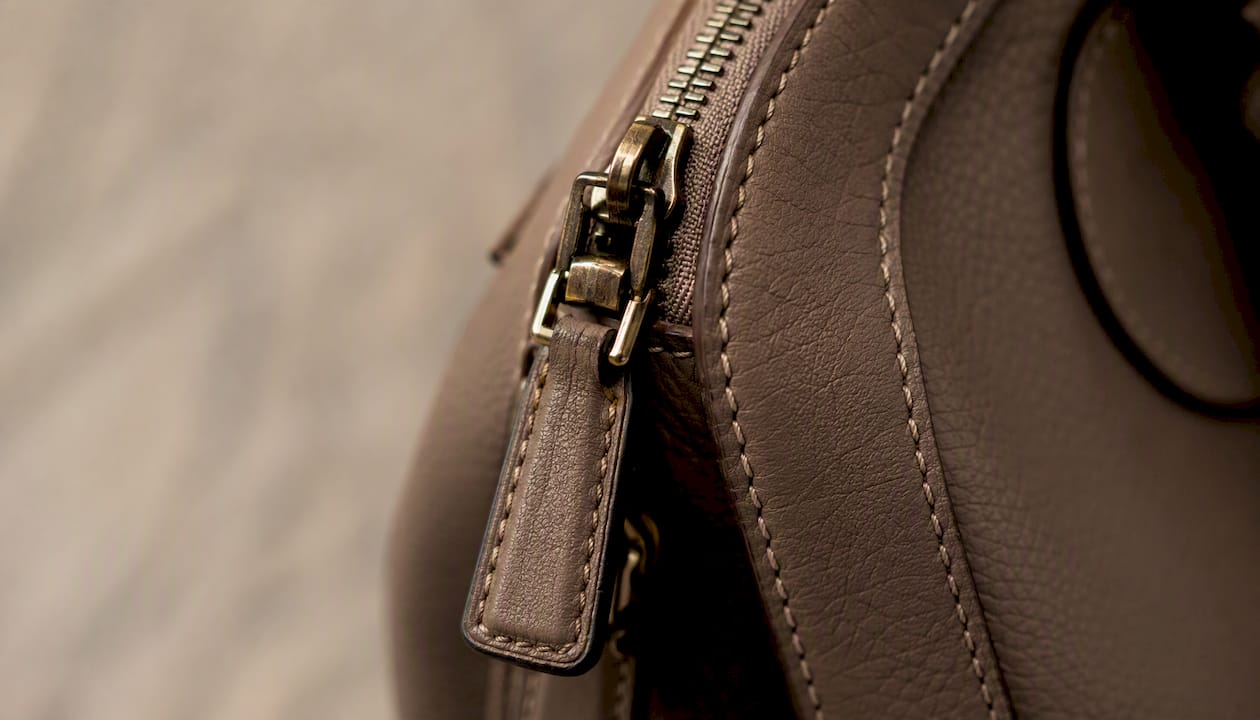
Interior construction is often where quality gaps show first. A well-made bag has a finished lining, reinforced corners, and a base that holds its shape when empty. Shoes should have a leather insole or a padded footbed, not raw synthetic. These details are what separate a piece worth its price from one that disappoints after six months.
Integrating statement pieces with your existing wardrobe
Before buying, audit what you already own. Pull out your five most-worn outfits and ask whether the new piece anchors at least three of them. If it only works with one specific look, it’s a costume piece, not a wardrobe investment.
The most versatile statement pieces share a neutral or classic silhouette with one bold element: a structured bag in an unexpected color, a classic coat in a vivid texture, a simple shoe with sculptural hardware. For designer accessory styling tips that show how to mix and match across different outfit bases, the principle is always the same: let the statement lead, and keep everything else in service of it.
The case for buying fewer, bolder, better pieces
Most people overcomplicate statement dressing. They buy too many pieces, style them all at once, and wonder why the look feels busy. The real discipline is restraint: one anchor, quiet supporting cast, and a piece you genuinely love rather than one you feel you should own.
A common misconception is that statement pieces must be loud or expensive. A successful statement is singular and personally resonant. The Norma Kamali swimsuit that makes you feel like yourself, the Gucci loafer you reach for every Friday, the Dior saddle bag that anchors three different outfits — these are the pieces worth investing in. The ones that photograph well but never leave the closet are not.
Authenticated designer statements, curated for you at Naiseshopper
Naiseshopper carries authenticated designer pieces from Chanel, Gucci, Prada, Bottega Veneta, Saint Laurent, Balenciaga, and more — all at discounted prices, with guaranteed authenticity on every order. You get the statement piece you actually want, not a compromise.
- Guaranteed-authentic inventory across handbags, shoes, ready-to-wear, and accessories
- Personal shopper assistance for US-based purchases
- Secure international shipping with shipping insurance
- Localized pricing and flexible payment options
Browse the full curated collection and find your next statement piece at Naiseshopper.
Sources
- designer-items-to-invest-in
- How to Choose Statement Jewelry: The Editorial Buying Guide | Sophia Jewelers
- How to Choose the Perfect Statement Piece for Every Occasion - Moda Jewels
- Designer Fashion Reviews: How to Judge If a Piece Is Worth It - Justheadoverheels
- The One Statement Piece Rule