TL;DR:
- Understanding designer terminology helps buyers evaluate luxury fashion items and verify authenticity accurately.
- Clear definitions of terms like haute couture, provenance, and atelier enable smarter shopping decisions and protect investments.
Designer goods terminology is the specialized vocabulary used to describe luxury fashion items, their design features, authenticity indicators, and industry classifications. Knowing this language separates confident buyers from confused ones. Whether you’re shopping for a Chanel flap bag, a pair of Saint Laurent sneakers, or a Gucci timepiece, the words in a product listing carry real weight. Terms like “haute couture,” “provenance,” and “atelier” are not just marketing flair. They signal specific production standards, legal designations, and authenticity criteria that directly affect what you’re buying and what it’s worth.
What are the key designer goods terminology basics every consumer should know?
Luxury fashion has its own vocabulary, and fashion terminology functions as a communication system across design, production, retail, and authentication sectors. Getting these terms right reduces costly mistakes.
Haute couture is the most legally protected term in fashion. Haute couture requires made-to-order garments, a Paris atelier with at least 15 full-time staff, and two annual collections of 50 or more original designs. The Chambre Syndicale de la Haute Couture, part of the Fédération de la Haute Couture et de la Mode (FHCM), enforces these standards. Brands like Chanel, Dior, and Valentino hold official haute couture status. A garment can be exquisitely crafted without qualifying as haute couture.
Prêt-à-porter translates directly to “ready to wear.” It refers to designer clothing produced in standard sizes and sold off the rack, as opposed to made-to-order couture. Prada, Bottega Veneta, and Balenciaga all operate primarily in this category. Prêt-à-porter still represents high design and quality, but it does not carry the regulatory weight of haute couture.
Atelier refers to a designer’s private workshop or studio where garments are constructed. The term signals handcraft, skilled labor, and small-scale production. When a listing references an atelier, it implies a level of artisanal production that mass manufacturing cannot replicate.
Provenance describes the documented origin and ownership history of a piece. For designer goods, provenance requires both origin specificity and a documented chain of custody verified by an unbiased party. A bag described as “from a Paris boutique” without purchase records does not meet full provenance standards.
Key terms to recognize at a glance:
- Maison: The French word for “house,” used to describe a fashion brand’s headquarters and creative identity (e.g., Maison Margiela)
- Capsule collection: A limited, tightly edited set of pieces released outside the main seasonal schedule
- Colorway: The specific color combination applied to a design across a product line
- Silhouette: The overall shape or outline of a garment, a core descriptor in designer apparel terminology
- Season: Refers to the fashion calendar cycle (spring/summer or fall/winter) that governs when collections are shown and sold
Pro Tip: When reading a product listing, cross-reference any term that sounds prestigious with an authoritative source. The Fashion Vocabulary project offers expert-reviewed definitions across historical, cultural, and industrial fashion systems.
How is designer goods terminology used to indicate authenticity and value?
Terminology in luxury fashion is not decorative. Specific words signal verified quality, legal compliance, and traceable origin. Knowing which terms carry real weight protects your investment.

Provenance is the clearest example. Provenance claims backed solely by brand assertions or partial tracking do not constitute full provenance. True provenance requires independent verification of both origin and chain of custody. When a seller lists a Chanel bag as “provenance verified,” ask for the documentation. A receipt, a certificate of authenticity, and a purchase history from an authorized retailer together form a credible provenance record.
Authentication terminology follows a similar logic. Here are the key terms and what they actually mean:
- Certificate of authenticity (COA): A document issued by the brand, an authorized retailer, or a recognized third-party authenticator confirming a piece is genuine. A COA from the brand itself carries the most weight.
- Serial number: A unique identifier stamped or engraved on a product, used to verify manufacture date and origin. Gucci, Louis Vuitton, and Chanel all use serial number systems, though the format differs by brand.
- Dust bag and box: Original packaging from the brand. While not proof of authenticity on their own, their presence and correct branding support a legitimate claim.
- Third-party authentication: Verification by an independent service such as Entrupy or a specialist authenticator. This is the gold standard for resale purchases.
- NFC chip or RFID tag: Technology embedded in newer luxury goods to allow digital verification. Brands like Prada and Burberry have integrated these into select product lines.
Marketing language often mimics authentication language without the substance. Phrases like “inspired by,” “designer style,” or “luxury quality” are not authenticity claims. They signal replicas or non-genuine goods. The word “authentic” alone, without supporting documentation, is also insufficient.
Pro Tip: Before purchasing a pre-owned designer item, request the full authentication record including serial number, COA, and original purchase receipt. Missing any one element weakens the claim.
What are the differences between haute couture, designer, luxury, vintage, and classic?
These five categories overlap constantly in fashion marketing, but they describe genuinely different things. Confusing them leads to overpaying, misjudging quality, or missing the significance of a piece.
Haute couture is not synonymous with luxury. It is a regulated designation tied to specific atelier operations and presentation requirements enforced by the FHCM. A fashion house can produce couture-level garments but cannot claim “haute couture” status without official accreditation. That distinction matters when evaluating price and exclusivity.
Designer and luxury are also distinct categories. Luxury is linked to exclusivity and heritage, whereas designer brands may focus more on creativity and fashion trends with varied pricing and exclusivity. A brand like Off-White is designer. A brand like Hermès is luxury. Both produce high-quality goods, but their market positioning, heritage, and exclusivity levels differ significantly.
Vintage and classic are time-based terms. Vintage typically refers to pieces from 20 to 100 years old that reflect a specific era’s aesthetic. Classic refers to a design that has remained relevant across decades regardless of age, such as the Chanel 2.55 bag or the Burberry trench coat. Antique is the rarest designation, reserved for items over 100 years old.
| Category | Definition | Key criteria | Common examples |
|---|---|---|---|
| Haute couture | Legally regulated made-to-order fashion | FHCM accreditation, Paris atelier, 50+ designs per year | Chanel, Dior, Valentino |
| Designer | Fashion-forward brand with creative direction | Trend influence, brand identity, varied exclusivity | Balenciaga, Off-White, Prada |
| Luxury | Heritage-driven, exclusive, high-craft brand | Exclusivity, heritage, premium materials | Hermès, Louis Vuitton, Bottega Veneta |
| Vintage | Pieces from 20–100 years ago | Age, era-specific design, condition | 1980s Chanel suits, 1990s Gucci bags |
| Classic | Timeless design with enduring relevance | Longevity, cultural recognition, consistent demand | Chanel 2.55, Burberry trench coat |
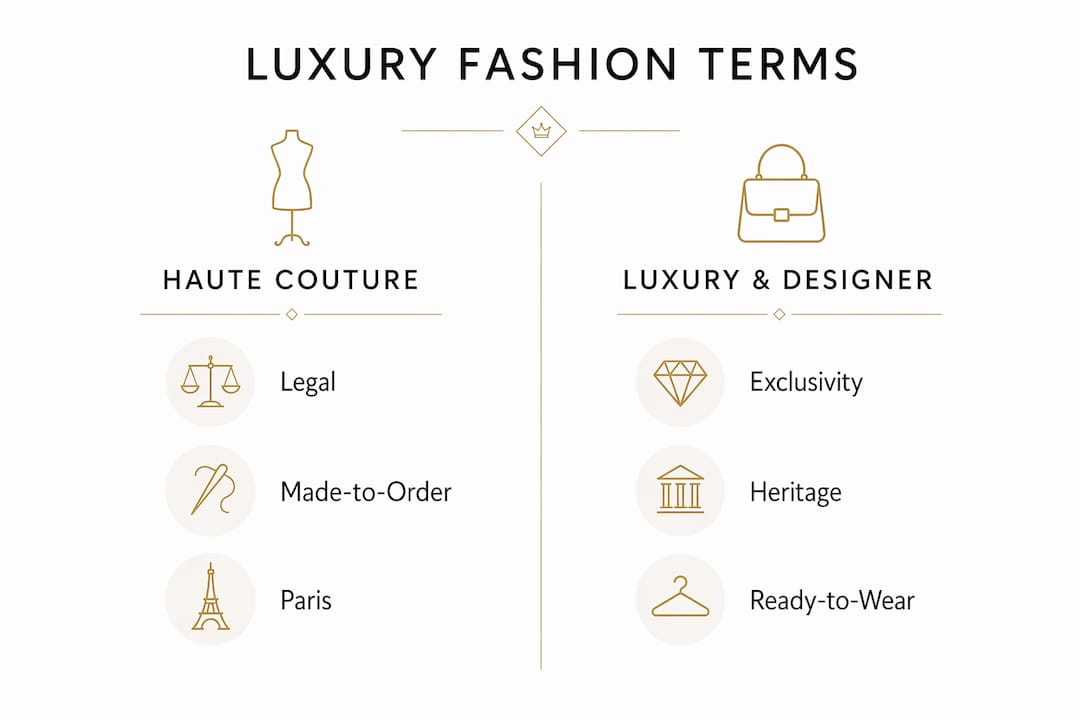
Understanding this table changes how you read listings. A “vintage designer” piece is not the same as a “luxury classic.” Each label carries its own set of expectations for craftsmanship, rarity, and resale value.
How can you use luxury fashion vocabulary to shop and collect smarter?
Knowing the right terms gives you a real advantage when evaluating listings, negotiating prices, and building a collection with lasting value. Fashion terminology is a living vocabulary, and staying current with authoritative sources keeps your knowledge sharp.
Apply your terminology knowledge with these practices:
- Read listings critically. When a listing uses “atelier-made” or “hand-stitched,” verify those claims against the brand’s known production methods. Gucci and Saint Laurent publish production information that you can cross-reference.
- Check provenance documentation. A well-documented provenance increases resale value and confirms authenticity. Ask for receipts, serial numbers, and any correspondence with the original retailer.
- Distinguish marketing from specification. “Luxury feel” and “premium quality” are subjective marketing phrases. “Full-grain leather,” “YKK hardware,” and “made in Italy” are verifiable specifications.
- Know your brand tiers. Understanding whether a brand is haute couture, luxury, or designer helps you calibrate price expectations. Paying haute couture prices for a prêt-à-porter piece is a common overpayment trap.
- Use authentication resources. Platforms and guides like Naiseshopper’s expert authentication steps walk you through serial number checks, hardware inspection, and stitching standards for specific brands.
- Research before you buy. For collectors, the designer brand terminology guide at Naiseshopper offers detailed explanations of how retail listings use precise fashion vocabulary.
The most common mistake collectors make is treating brand name alone as a quality signal. Terminology gives you the framework to evaluate what the brand name actually represents in a specific piece.
Key Takeaways
Mastering designer goods terminology is the single most effective way to authenticate purchases, assess value, and avoid costly mistakes in luxury fashion.
| Point | Details |
|---|---|
| Haute couture is legally regulated | Only FHCM-accredited Paris ateliers can use the term, regardless of craftsmanship level. |
| Provenance requires dual verification | Origin specificity and chain-of-custody documentation are both required for a valid provenance claim. |
| Designer and luxury are not interchangeable | Luxury signals heritage and exclusivity; designer signals creative direction and trend influence. |
| Marketing language is not authentication | Phrases like “luxury quality” or “inspired by” carry no authenticity weight without supporting documentation. |
| Terminology knowledge protects your investment | Knowing key terms helps you evaluate listings accurately and negotiate with confidence. |
Why the language of luxury matters more than ever in 2026
The vocabulary of designer goods has always been a power tool. Brands use it to position themselves, and buyers who understand it hold the advantage. After years of working closely with luxury fashion, I’ve come to believe that terminology is not just helpful. It is the foundation of every smart purchase.
What concerns me most right now is how marketing language has crept into spaces where verified terminology should live. Sellers use words like “couture” and “provenance” loosely, and buyers pay the price. The regulatory framework around haute couture exists precisely because language without standards becomes meaningless. That same discipline needs to apply to how we read and evaluate any luxury listing.
Sustainability and technology are also reshaping the vocabulary. Terms like “upcycled luxury,” “digital authentication,” and “circular fashion” are entering the designer goods space fast. Some carry real meaning. Others are marketing dressed up as values. The only way to tell the difference is to demand the same rigor you would apply to “provenance” or “atelier.” Ask what the term means, who verifies it, and what documentation supports it.
Collecting designer goods is one of the most rewarding pursuits in fashion. The terminology is your map. Learn it, use it, and never let a seller’s confidence substitute for your own knowledge.
— Camila
Authentic designer pieces, described with precision, at Naiseshopper
Naiseshopper curates authenticated designer goods from brands including Saint Laurent, Jimmy Choo, Gucci, Prada, and Balenciaga, with product descriptions that use accurate, verifiable terminology rather than vague marketing language.
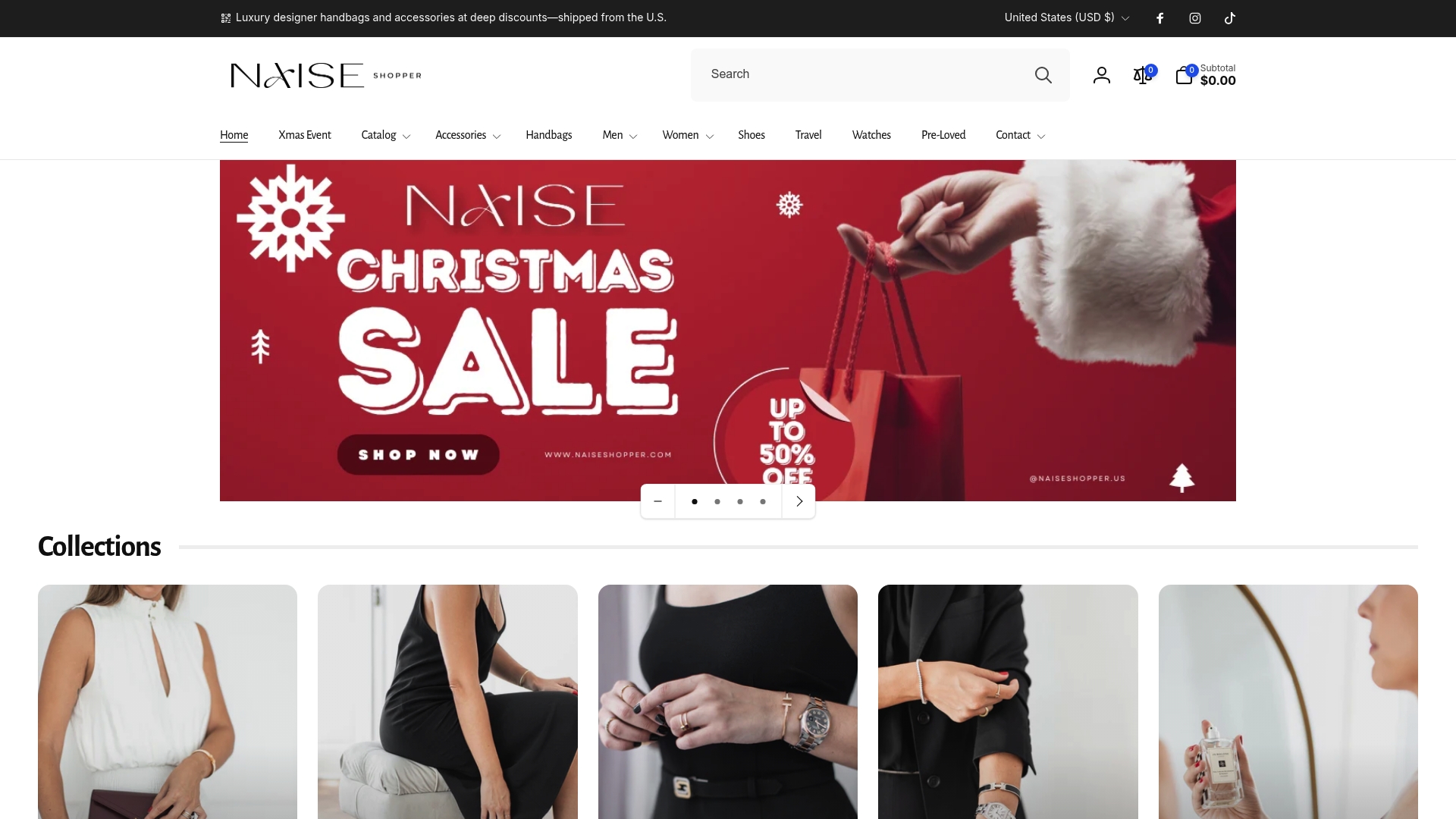
Every listing on Naiseshopper reflects the kind of specificity this guide covers: production origin, material specifications, and authentication details that give you real confidence at checkout. Whether you’re drawn to the Saint Laurent mid-top blue sneakers or the refined elegance of Jimmy Choo pointed-toe leather flats, each piece comes with the documentation and transparency that serious buyers expect. Shop with the vocabulary you’ve built and the confidence it earns you.
FAQ
What does “designer goods terminology” mean?
Designer goods terminology is the specialized vocabulary used to describe luxury fashion items, including their design features, production methods, authenticity indicators, and industry classifications. Knowing these terms helps consumers evaluate listings accurately and avoid counterfeits.
Is haute couture the same as luxury fashion?
Haute couture is not the same as luxury fashion. It is a legally protected designation enforced by the FHCM, requiring a Paris atelier, made-to-order production, and two annual collections of at least 50 original designs.
What is provenance in designer fashion?
Provenance is the documented origin and ownership history of a piece. Full provenance requires both origin specificity and a chain-of-custody record verified by an independent party, not just a brand’s own disclosure.
How do I tell “designer” from “luxury” when shopping?
Designer brands prioritize creative direction and trend influence, while luxury brands are defined by heritage, exclusivity, and premium materials. Hermès and Bottega Veneta are luxury; Balenciaga and Off-White are designer, even though both categories produce high-quality goods.
What makes a fashion item “vintage” versus “classic”?
Vintage refers to pieces from 20 to 100 years old that reflect a specific era’s style. Classic describes a design that has remained culturally relevant across decades, like the Chanel 2.55 bag, regardless of when it was made.