TL;DR:
- True fashion investment pieces are durable, timeless, and hold or appreciate in value over decades.
- Key characteristics include premium materials, strong brand heritage, and scarcity that drive resale value.
- Authenticity, condition, and proper documentation are essential for protecting long-term value in luxury resale.
Most people assume luxury fashion is about status, not strategy. That assumption is expensive. The global luxury resale market is accelerating faster than primary retail, and collectors who understand what makes a piece genuinely investment-grade are quietly building portfolios that appreciate over time. This guide breaks down exactly what separates a true fashion investment from a trend purchase, which brands and categories lead on value retention, and how to protect your pieces for maximum long-term gain. Whether you’re adding your first Hermès or rounding out a mature collection, the framework here will sharpen every decision you make.
Table of Contents
- What is a fashion investment piece?
- Key characteristics: How to spot an investment-grade piece
- Luxury resale value: What the numbers reveal
- Authenticity, provenance, and platform trust
- Expert insights: Market trends and what’s next
- Our experience: What most collectors overlook with fashion investments
- Shop curated investment pieces on NAISEshopper
- Frequently asked questions
Key Takeaways
| Point | Details |
|---|---|
| Quality over trend | True investment pieces are chosen for timeless construction, not fleeting hype. |
| Authentication is essential | Verified provenance and condition greatly impact resale value and security. |
| Heritage brands lead | Legendary names like Hermès and Chanel still offer the strongest investment returns. |
| Market is growing | Luxury fashion resale is expanding quickly, creating more opportunities for collectors. |
| Data informs choices | Tracking recent benchmarks and trends helps maximize investment outcomes. |
What is a fashion investment piece?
Not every expensive item qualifies as an investment. Price alone is not the standard. A true fashion investment piece earns that label through a specific combination of qualities that keep it desirable, wearable, and valuable across decades.
As one sharp definition puts it, fashion investment pieces are “high-quality, durable garments and accessories with timeless silhouettes, premium materials, and strong construction that prioritize cost-per-wear, versatility, and longevity over trends.” That framing is useful because it shifts the lens from “how much did I spend” to “how much value does this deliver over time.”
Here’s what investment pieces consistently share:
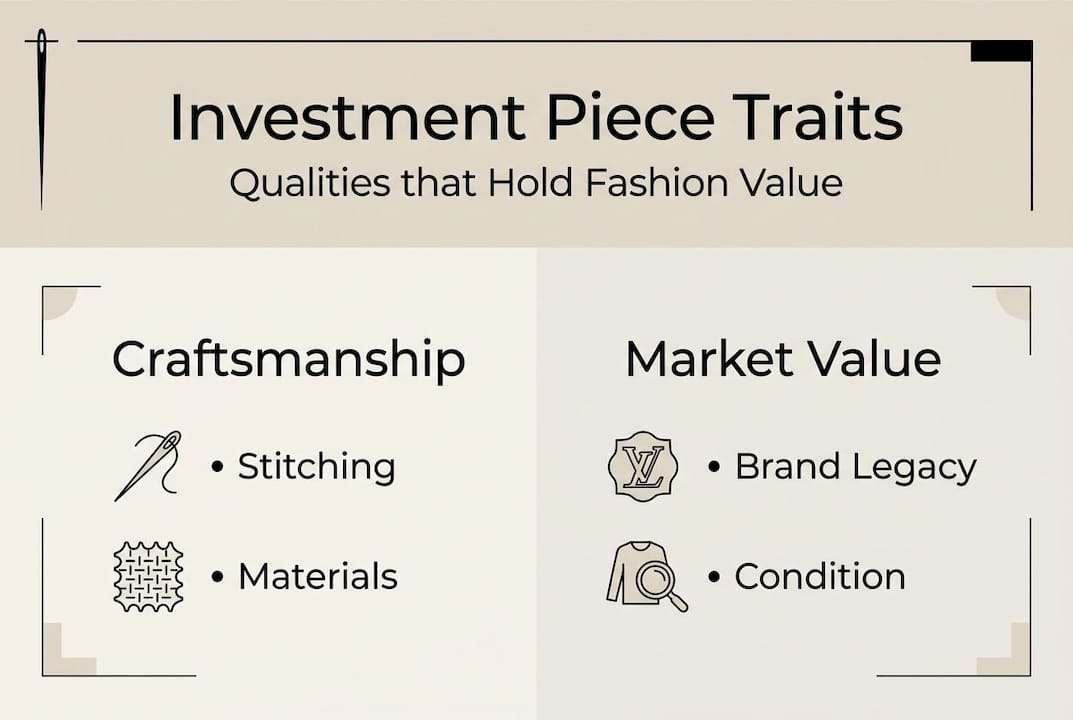
- Exceptional construction: Hand-stitching, reinforced seams, and precision finishing that hold up after years of use
- Premium materials: Full-grain leather, cashmere, silk, and hardware that ages beautifully rather than deteriorating
- Timeless silhouette: Cuts and shapes that don’t read as “this season” and won’t look dated in five years
- Strong brand heritage: A house with decades of craft history and a loyal collector base
- High cost-per-wear ratio: The more you wear it, the lower the effective cost per use
Investment pieces are about longevity and value, not hype. The best ones look as relevant in year ten as they did on day one.
For a deeper look at how to approach luxury investing basics, it helps to study the category before you buy.
Pro Tip: Before committing to a purchase, ask yourself: “Would I still want this in 15 years, and could I sell it for close to what I paid?” If both answers are yes, you’re likely looking at a genuine investment piece.
Key characteristics: How to spot an investment-grade piece
With a solid definition in place, let’s break down the unique characteristics of true investment pieces and how to spot them.
The clearest way to see the difference is side by side:
| Feature | Investment piece | Trend piece |
|---|---|---|
| Materials | Premium, durable, natural | Synthetic, fashion-forward |
| Silhouette | Timeless, classic | Season-specific |
| Brand heritage | Established, iconic | Emerging or hype-driven |
| Resale value | Holds or appreciates | Drops sharply |
| Cost-per-wear | Low over time | High relative to use |
Here are five criteria to run any potential purchase through:
- Quality of materials and construction: Look for full-grain leather, tight stitching, and hardware that feels weighty and solid. Run your hand along seams. Anything that feels thin or rushed is a red flag.
- Brand heritage and collector demand: Houses like Chanel, Hermès, and Prada carry decades of craft history. That heritage creates a built-in collector base that sustains resale demand.
- Timeless design language: Classic pieces like tailored blazers, cashmere sweaters, trench coats, leather boots, and structured handbags have proven they outlast trends.
- Scarcity and limited availability: Pieces produced in limited runs or discontinued styles often appreciate. Scarcity drives collector urgency.
- Versatility and seasonless wearability: A piece that works across seasons and occasions delivers more value per wear and stays relevant longer.
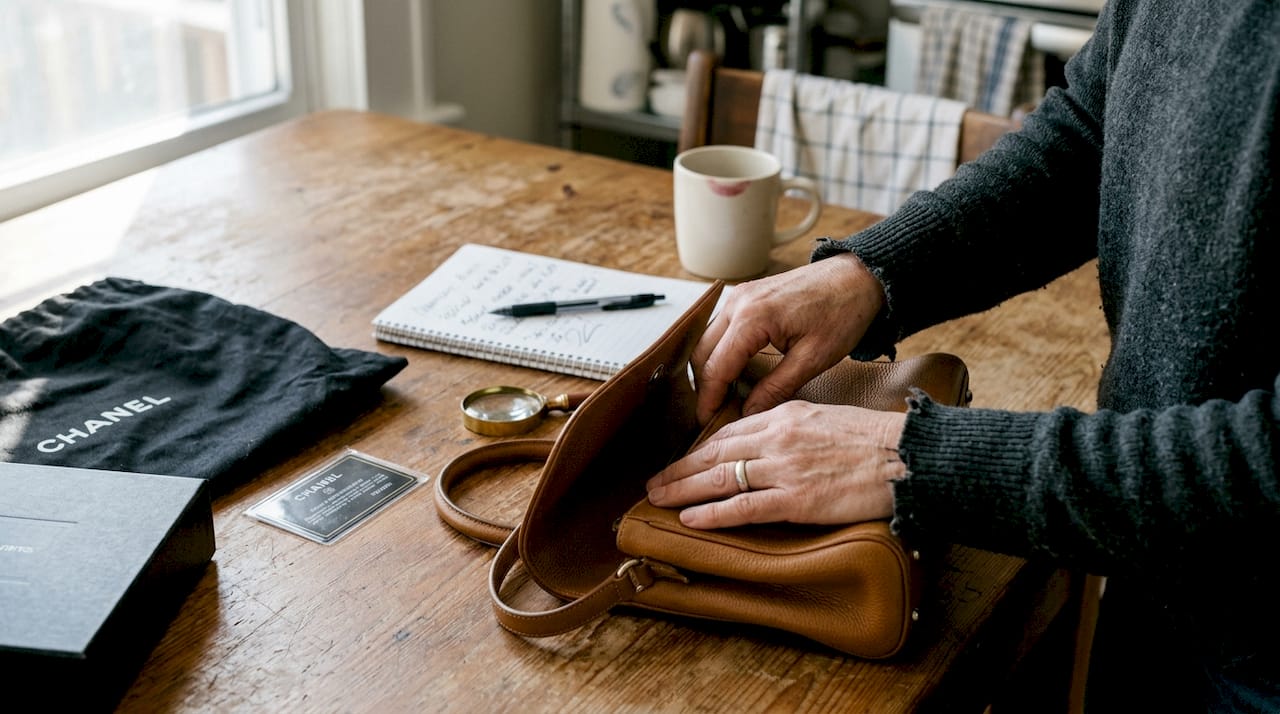
When assessing authenticated luxury pieces, always prioritize condition and completeness of original packaging.
Pro Tip: Stick to neutral or classic hues like black, camel, navy, and ivory. They photograph well for resale and appeal to the widest future buyer pool.
Luxury resale value: What the numbers reveal
Identifying investment pieces means understanding their track record for value retention. Let’s look at the numbers.
The 2025 Rebag Clair Report delivers some of the most compelling benchmarks available. Hermès leads with an average 138% value retention, up 38% year over year. Goyard follows at 132%. The Row has emerged as a new category leader at 97% retention, earning its place among serious investment brands. Van Cleef jewelry holds at 112%. And the Hermès Birkin has seen resale prices climb 92% since 2015, while retail prices rose just 43% in the same period.
Here’s a snapshot of top performers:
| Brand/Item | Avg. resale retention | Notes |
|---|---|---|
| Hermès Birkin/Kelly | Up to 282% | Consistent top performer |
| Goyard St. Louis | 132% avg | Quiet luxury staple |
| Van Cleef Alhambra | 112% avg | Jewelry category leader |
| The Row Margaux | 97% avg | Emerging “unicorn” |
| Chanel Classic Flap | Strong retention | Iconic, globally recognized |
Beyond the data table, here are the iconic pieces that consistently hold value:
- Hermès Birkin and Kelly bags
- Chanel Classic Flap and 2.55
- Louis Vuitton Neverfull and Speedy
- Goyard St. Louis tote
- Rolex Submariner and Daytona watches
- Van Cleef Alhambra necklaces
Handbags dominate the investment resale category, but watches and fine jewelry are closing the gap fast. For a focused breakdown, explore designer bag resale value and the full handbag resale guide to see which specific styles perform best.
Authenticity, provenance, and platform trust
Owning an investment-caliber piece is only half the story. Protecting its status and value is equally important.
Authentication is now non-negotiable for high-value fashion. Luxury resale platforms like Vestiaire Collective, The RealReal, and 1stDibs provide expert verification, and pieces listed in “like new” condition with full documentation consistently command the highest prices. Condition is not just cosmetic. It’s financial.
Here’s how to protect your investment from day one:
- Keep all original documentation: Receipts, dust bags, boxes, authenticity cards, and care booklets. These directly increase resale value.
- Store pieces correctly: Stuff leather bags to maintain shape, keep items away from direct sunlight, and use climate-controlled storage for delicate materials.
- Engage with verified platforms: When buying or selling, choose platforms with multi-step authentication processes. This protects you on both ends of the transaction.
- Track condition proactively: Minor repairs done by brand-authorized craftspeople preserve value far better than letting wear accumulate.
Condition and documentation are the two variables collectors control completely. Every scratch and missing card costs real money at resale.
For buyers entering the market, understanding the process of authenticating designer goods is essential before any significant purchase. You can also review a detailed bag authenticity checklist or explore what luxury item authenticity really means in practice.
Pro Tip: Photograph every piece thoroughly when you buy it, including hardware details, stitching, and serial numbers. This documentation is invaluable when you decide to sell.
Expert insights: Market trends and what’s next
As the market evolves, several expert-level trends are redefining both what sells and what collectors value most.
The BCG x Vestiaire Collective 2025 report projects luxury resale will reach $320 to $360 billion by 2030, growing three times faster than the primary market. Handbags already account for 40% of secondhand closets. That’s not a niche trend. That’s a structural market shift.
Here are the key forces shaping the future of luxury resale:
- Heritage over hype: Scarcity and brand history now drive resale performance more than retail price. Collectors are moving away from logo-heavy pieces toward understated, craft-driven designs.
- Quiet luxury is winning: The Row’s rise to 97% retention proves that minimalist, quality-first brands are earning serious collector credibility.
- Gen Z is changing the game: Younger buyers are actively factoring resale value into purchase decisions before they buy. They treat fashion more like a portfolio than a wardrobe.
- Digital provenance is arriving: Blockchain-based digital passports are emerging as a standard for authenticating and tracking luxury items. Brands are beginning to embed these at point of sale, and pieces with verified digital records will command premiums.
Heritage and scarcity are outperforming price as the primary drivers of resale value. The market is rewarding craft, not cost.
This shift means collectors who focus on construction, provenance, and brand legacy are better positioned than those chasing seasonal hype or influencer-driven releases.
Our experience: What most collectors overlook with fashion investments
Stepping back from the data, here’s what years in the luxury fashion market have taught us.
Even seasoned collectors make emotional decisions. That’s not always wrong. But the mistake is letting emotion override the criteria that future buyers will use. You might love a bold, statement piece, but if the next buyer pool is small, your exit is limited. The best investments are pieces that you love and that a wide pool of future buyers will want.
Condition and provenance are where most collectors leave money on the table. Flawless documentation is not just paperwork. It’s proof of authenticity, care, and value. A Birkin with its original receipt, dust bag, and box sells for meaningfully more than an identical bag without them.
Long-term relationships with trusted resale platforms also pay dividends. Platforms that know your collection can alert you to market shifts, help you time sales, and connect you with serious buyers. That network is an asset in itself.
For a deep-dive into investing strategies that go beyond the basics, build your knowledge before building your collection.
Pro Tip: Always buy with the next buyer in mind. Focus on attributes that future collectors already want: classic silhouettes, neutral colors, full documentation, and pieces from houses with proven resale track records.
Shop curated investment pieces on NAISEshopper
If you’re ready to apply these principles, explore a curated selection tailored for collectors.
Naise Shopper offers a carefully curated selection of authenticated luxury pieces built for collectors who take value seriously. Every item is verified for authenticity, so you’re buying with confidence from day one.
Start with statement investments like the Versace black leather pumps, a bold yet timeless addition to any portfolio, or the Prada cashmere suit, which delivers the quiet luxury and craft quality that today’s collectors prize. Ready to build your collection? Browse more investment pieces across all categories and discover authenticated designer fashion at prices that make smart collecting accessible.
Frequently asked questions
Which fashion brands are the most reliable for investment value?
Brands like Hermès, Chanel, Goyard, The Row, and Van Cleef consistently achieve top resale values year after year, with Hermès Birkin and Kelly bags reaching up to 282% retention.
How important is authentication when buying a fashion investment piece?
Authentication is critical for high-value pieces, and platforms with expert verification maximize both purchase security and future resale value, especially for pieces in like-new condition.
What should I look for in a piece’s provenance?
Look for complete documentation, original receipts, and ideally a digital passport or blockchain record, which are emerging as the new standard for future-proof value verification.
Do fashion investment pieces have to be bags, or can apparel qualify?
Tailored blazers, coats, high-quality cashmere sweaters, trench coats, and rare sneakers also qualify as investment pieces when they meet key criteria like timeless design and premium construction.
Will the luxury resale market keep growing?
Luxury resale is projected to reach $320 to $360 billion by 2030, growing three times faster than the primary market, making now a strong time to build a quality collection.