TL;DR:
- Shopping services in fashion offer personalized guidance from discovery to purchase through human, AI, or hybrid approaches. They influence trend spread, reduce buyer’s remorse, and democratize luxury access by blending curation with accessibility. Combining AI research with human judgment yields the best results, maintaining personal style and emotional satisfaction.
Shopping services in fashion are defined as curated, personalized assistance systems that guide consumers from discovery to purchase, whether through human personal shoppers, AI-driven assistants, or hybrid platforms. The role of shopping services in fashion has never been more consequential: 56% of online shoppers prefer platforms with personalized recommendations, and strong personalization reduces customer churn by 10%–30%. That shift is reshaping how luxury consumers engage with brands like Gucci, Chanel, Prada, and Valentino. The industry term for this discipline is “clienteling,” and it covers everything from one-on-one styling sessions to AI-powered product filtering. Understanding how these services work gives you a real edge in building a wardrobe that is intentional, not accidental.
How do personalized shopping services enhance the fashion shopping experience?
Personalized shopping services transform a chaotic retail environment into a focused, confidence-building experience. A professional personal shopper acts as what the industry calls a “visual translator,” filtering hundreds of options down to pieces that genuinely fit your lifestyle, body, and aesthetic. That curation function is not cosmetic. Personal shoppers reduce decision fatigue by aligning every choice with a client’s existing wardrobe and long-term style goals, so every piece serves a purposeful role.

AI-driven assistants bring a different kind of power to the fashion shopping experience. Amazon’s Rufus AI assistant reached over 300 million customers in 2025, and customers using it are 60% more likely to complete a purchase. That completion rate signals something important: when shoppers feel guided, they commit. Walmart’s Sparky assistant shows similar results, with users averaging 35% higher order values than non-users.
Technology is also changing the physical act of trying on clothes. Luxury group OTB partnered with Google Cloud to deploy generative AI Virtual Try-On APIs that deliver hyper-realistic, 360-degree product previews. That kind of tool closes the gap between browsing online and standing in a boutique fitting room. It also reduces return rates, which is a practical win for both the consumer and the retailer.
Key ways personalized services enhance the fashion shopping experience:
- Trend filtering: Personal shoppers and AI tools both narrow runway noise down to what actually works for your style profile.
- Virtual try-on technology: AI-powered previews let you visualize fit and proportion before committing.
- Curated recommendations: Platforms using personalization algorithms surface pieces you would not have found independently.
- Logistics management: Personal shoppers handle sourcing, sizing, and delivery coordination, removing friction from the process.
- Wardrobe coherence: Human stylists build collections where pieces work together, not just individually.
Pro Tip: Before your first session with a personal shopper, photograph your current wardrobe and note three outfits you feel most confident wearing. That visual brief cuts your consultation time in half and gives your stylist a concrete starting point.
What impact do shopping services have on fashion trends and market accessibility?
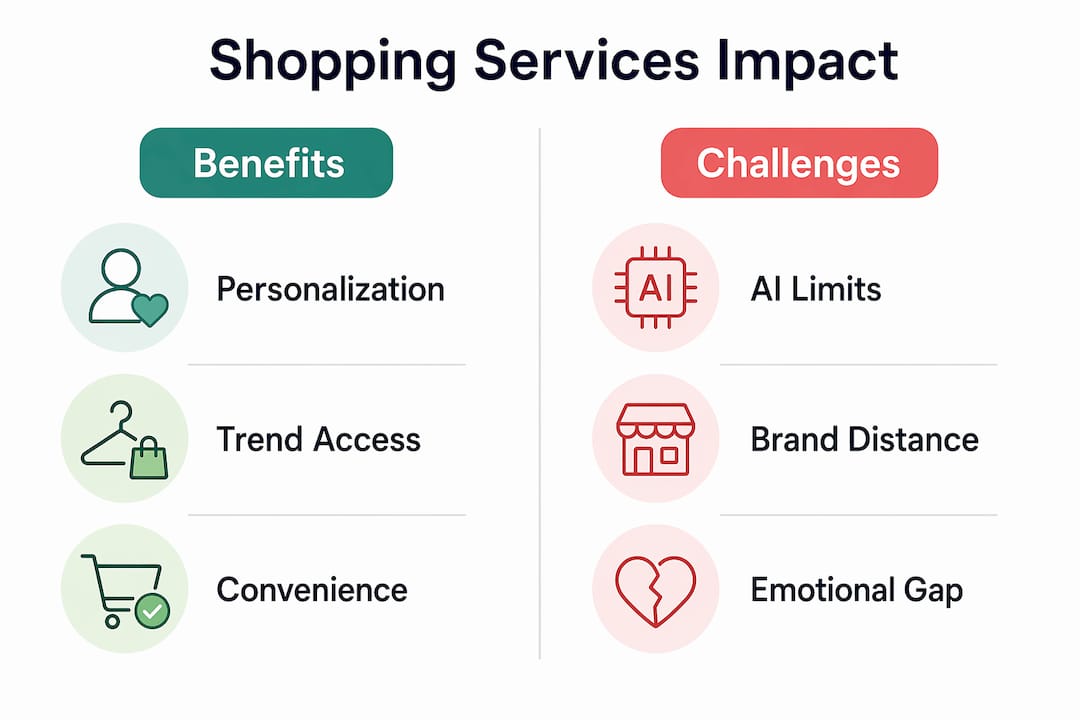
Shopping services do not just respond to trends. They actively shape which trends reach consumers and how quickly those trends move from runway to wardrobe. A personal shopper who specializes in luxury clienteling decides which Bottega Veneta silhouette or Saint Laurent color story gets presented to a client. That editorial decision, multiplied across thousands of clients, influences what sells and what stalls.
Curated shopping also reduces buyer’s remorse at scale. Personal shoppers prevent impulsive decisions by filtering choices against a client’s lifestyle and existing wardrobe, which means fewer returns and more satisfaction per purchase. For luxury consumers spending $1,000 or more per item, that guidance is not a luxury. It is a financial safeguard.
The democratization of luxury access is one of the most significant shifts in recent years. Online platforms and AI assistants now give aspirational shoppers access to the same quality of product discovery that once required a personal relationship with a boutique sales associate. Platforms like Naiseshopper extend this access further by offering authenticated designer pieces at discounted prices, with personal shopper assistance available for US-based customers. That combination of curation and accessibility is rewriting who gets to participate in luxury fashion.
- Trend amplification: Curated recommendations push specific trends to the top of consumer awareness faster than traditional advertising.
- Barrier reduction: AI tools and online platforms remove geographic and financial barriers to luxury discovery.
- Informed purchasing: Shopping guides and personalized filters help consumers understand quality markers before buying.
- Loyalty reinforcement: Personalized experiences increase repeat purchasing, which reduces customer acquisition cost by up to 50%.
- Style education: Consistent engagement with a personal shopper builds a consumer’s own fashion literacy over time.
Stat to know: Platforms with strong personalization see conversion rates increase by up to 30%. That figure reflects not just better sales, but better matches between consumers and products they will actually wear and love.
What challenges and psychological effects arise from AI-driven shopping services?
AI shopping services create genuine efficiency, but they also introduce psychological costs that are easy to overlook. Consumers report losing the joy of anticipation when an algorithm selects and delivers items autonomously. The act of choosing, browsing, and deciding carries emotional weight that contributes to satisfaction after purchase. When AI removes that process, the item arrives but the emotional payoff is diminished.
Consumer skepticism about autonomous AI purchasing is also significant. Surveys consistently show that shoppers want to control their level of engagement and value human interaction, particularly for high-stakes luxury purchases. Handing full purchasing authority to an AI agent feels, for many consumers, like outsourcing a deeply personal form of self-expression.
“AI shopping eases complexity but may diminish shoppers’ emotional satisfaction by replacing human consultation with opaque algorithms. Consumers experience a reduced sense of personal authorship over their own style when the selection process is fully automated.”
There is also a structural concern for retailers. AI shopping agents risk intermediating brands from their own customers, reducing control over presentation, storytelling, and upsell opportunities. A brand that loses the direct customer conversation loses the ability to communicate its values, craftsmanship, and heritage. For luxury houses where narrative is central to value, that loss is serious.
How do professional personal shoppers compare to AI-driven solutions?
Human personal shoppers and AI assistants are not competing for the same role. They solve different problems, and the most effective approach uses both.
| Feature | Professional personal shopper | AI-driven shopping assistant |
|---|---|---|
| Style nuance | Reads mood, lifestyle, and emotional context | Matches based on stated preferences and past behavior |
| Speed | Slower, relationship-based process | Instant filtering across thousands of products |
| Price comparison | Limited, curated selection | Broad, objective price and availability scanning |
| Emotional connection | High, builds trust over multiple sessions | Low, transactional by design |
| Best for | Significant luxury purchases, wardrobe building | Discovery, research, and routine replenishment |
| Personalization depth | Deep, evolves with the client over time | Improves with data but lacks contextual intuition |
High-end personal shopping goes far beyond product selection. Top-tier services customize the entire environment, from preferred music during fittings to curated refreshments, replicating the intimacy of a private boutique in any setting. That level of attention creates an experience that no algorithm currently replicates.
AI assistants, by contrast, excel at objective tasks. They scan inventory across multiple platforms, flag price drops, and surface options that match a stated brief within seconds. For a consumer researching fashion trends for 2025 or comparing prices on a specific Balenciaga silhouette, an AI tool is faster and more thorough than any human researcher.
The hybrid approach is where savvy luxury consumers operate. Savvy shoppers use AI for research and filtering, then bring those findings to a human stylist for final decisions on significant purchases. That workflow preserves both efficiency and emotional investment.
Pro Tip: Use AI tools to build a shortlist of three to five options, then bring that list to your personal shopper or a trusted stylist for a final edit. You get the speed of technology and the judgment of experience.
What practical strategies can consumers use to maximize shopping services?
Getting the most from shopping services requires knowing which tool to use at which stage of the purchasing process. The two systems serve different moments in the consumer decision cycle.
- Use AI for discovery: Start any search with an AI assistant or personalization-driven platform to surface options you would not find manually. Set clear filters for brand, price range, and style category.
- Build a style brief: Before engaging a personal shopper for luxury purchases, document your current wardrobe gaps, upcoming occasions, and three to five reference images that capture your aesthetic.
- Set a decision threshold: Decide in advance which purchase value triggers human consultation. Many experienced luxury consumers set this at $500 or above.
- Audit your recommendations: Periodically review what AI tools are suggesting and ask whether those suggestions reflect your actual style or just your most recent purchases.
- Protect your personal authorship: Resist the pull toward fully automated purchasing. Maintaining active choice in your wardrobe keeps your style intentional and personally meaningful.
- Leverage curated platforms: Platforms that specialize in curated luxury fashion already do significant filtering work, reducing the volume of irrelevant options you encounter.
- Request transparency: When working with a personal shopper, ask them to explain why each piece was selected. That explanation builds your own fashion literacy over time.
Key Takeaways
Shopping services in fashion deliver the most value when consumers combine AI-driven discovery with human curation for high-stakes luxury purchases.
| Point | Details |
|---|---|
| Personalization drives conversion | Platforms with personalized recommendations see conversion rates increase by up to 30%. |
| Personal shoppers prevent buyer’s remorse | Human stylists filter trends against your lifestyle, reducing impulsive and regrettable purchases. |
| AI excels at research, not relationship | Use AI tools for discovery and price comparison, then rely on human judgment for significant buys. |
| Emotional cost of full automation | Fully automated purchasing reduces the personal satisfaction and sense of authorship that makes fashion meaningful. |
| Hybrid strategies win | Combining AI efficiency with human expertise produces the best outcomes in luxury fashion shopping. |
Why the human touch still defines luxury shopping
I have spent years watching the fashion industry chase the next technology fix, and the pattern is always the same: the tool that promises to replace the stylist ends up making the stylist more valuable. AI assistants are genuinely useful. I use them myself for research and price tracking. But when I am deciding on a piece that will anchor a wardrobe for the next five years, I want a conversation, not an algorithm.
What concerns me about the current direction is the subtle way AI agents shape consumer preferences toward profitability rather than personal fit. Most consumers do not realize that the recommendations they receive are optimized for the platform’s margin, not their wardrobe. That is not a reason to avoid AI tools. It is a reason to stay actively engaged in your own decisions.
The future of luxury shopping services is not human versus machine. It is knowing when to use each. The consumers who will build the most coherent, satisfying wardrobes are those who use technology for speed and humans for meaning. That balance is not complicated. It just requires intention, which is exactly what great personal shopping in luxury fashion has always been about.
— Camila
Naiseshopper: Where curated luxury meets personal service
Naiseshopper brings together authenticated designer pieces and personal shopping assistance in one platform, making it easier to shop with intention rather than impulse.
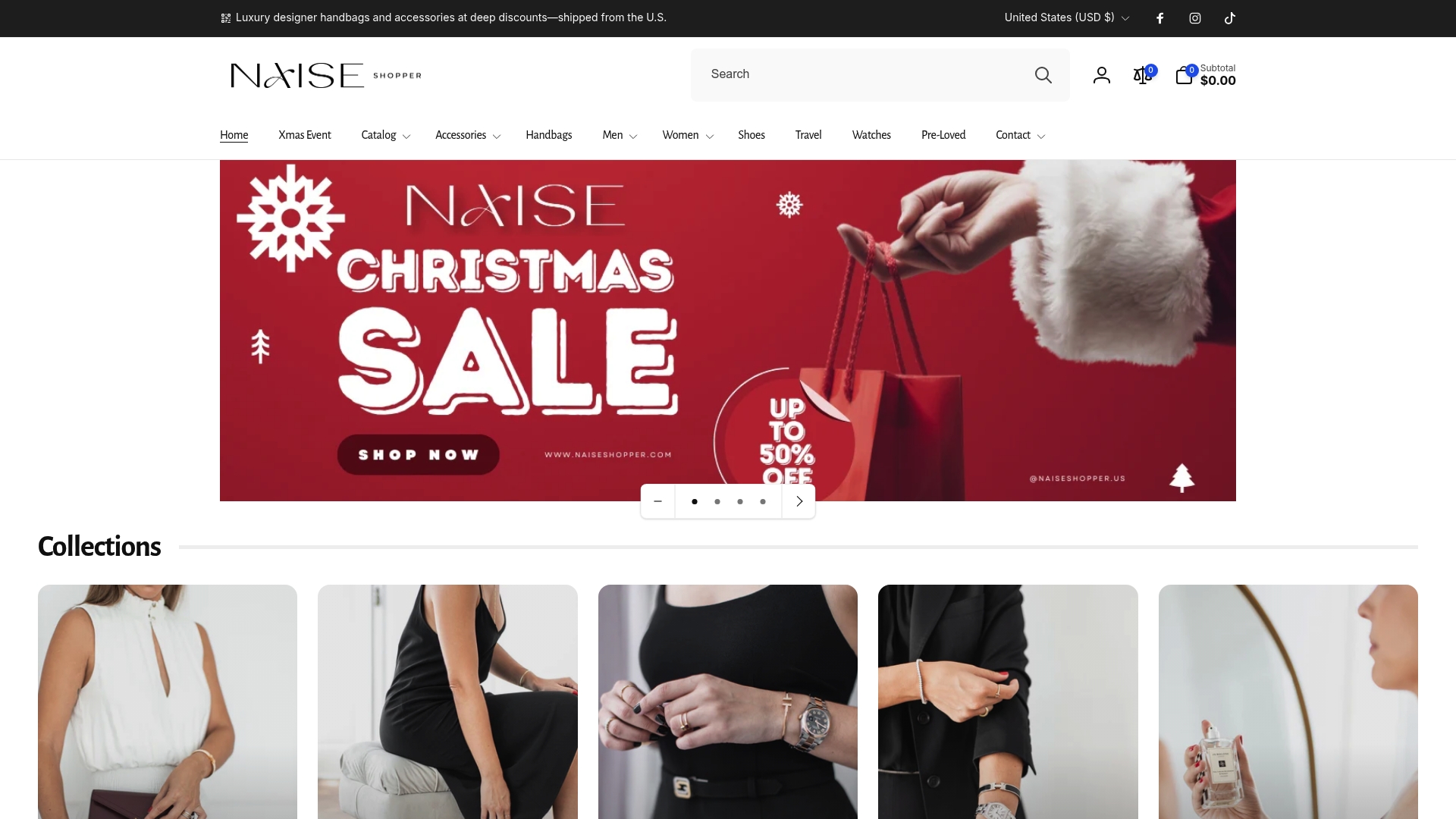
The collection includes pieces that reward deliberate selection. The Dior Black Leather Oxfords deliver classic sophistication that works across formal and elevated casual contexts, while the Alexander McQueen Gray Leather Boots bring bold craftsmanship to any wardrobe. Every item on Naiseshopper is authenticated, discounted from retail, and available with international secure shipping. Personal shopper assistance is available for US-based customers who want a more guided experience. Explore the full collection at Naiseshopper and shop with the confidence that comes from real curation.
FAQ
What is the role of shopping services in fashion?
Shopping services in fashion guide consumers from discovery to purchase through personalized assistance, trend curation, and AI-driven recommendations. They shape which products reach consumers, how quickly trends spread, and how satisfied shoppers feel after buying.
How do personal shoppers differ from AI shopping assistants?
Personal shoppers provide deep, relationship-based curation that accounts for mood, lifestyle, and emotional context, while AI assistants excel at fast, objective filtering across large product inventories. The most effective approach uses both in sequence.
Are AI shopping assistants worth using for luxury fashion?
AI assistants are valuable for research, price comparison, and initial filtering, but luxury shopping services recommend human consultation for significant purchases where personal fit and emotional investment matter most.
What are the benefits of personalized recommendations in fashion?
Personalized recommendations reduce customer churn by 10%–30%, increase conversion rates by up to 30%, and lower customer acquisition costs by up to 50%, making them one of the highest-impact tools in fashion retail.
How can I maintain my personal style when using AI shopping tools?
Set a clear style brief before using any AI tool, audit recommendations regularly to check for drift from your actual aesthetic, and reserve final decisions on significant purchases for human consultation or your own deliberate judgment.