TL;DR:
- A “guaranteed authentic” label does not mean the brand has verified the item; it only means a third-party examined it. Authenticity guarantees involve various methods and legal nuances, and reputable sellers provide transparent process details. To shop confidently, ask about the authenticator, methods used, dispute timelines, and retain thorough documentation.
You’ve found a stunning Chanel flap bag or a pristine pair of Gucci loafers at a price that feels almost too good to be true. The listing says “100% guaranteed authentic” and shows a certificate. That should be enough, right? Not quite. The gap between what authenticity guarantees promise and what they deliver is wider than most shoppers realize, and understanding that gap is the single most powerful move you can make before spending four or five figures on a designer piece.
Table of Contents
- What is a brand authenticity guarantee and what isn’t?
- How do luxury resale authenticity guarantees actually work?
- Why not all guarantees are created equal: process, methods, and what to look for
- Best practices: how to shop luxury with confidence and transparency
- Why “guaranteed authentic” is not enough and what truly matters
- Find your next authenticated designer piece with assurance
- Frequently asked questions
Key Takeaways
| Point | Details |
|---|---|
| Not all guarantees are equal | Brand authenticity guarantees vary widely and may not mean brand endorsement unless explicitly documented. |
| Transparency is critical | The best protection comes from clear, documented authentication processes rather than certificates alone. |
| Buyers should ask questions | Luxury shoppers should verify who conducted authentication and how, instead of relying only on labels or headlines. |
| Know your recourse | Strong guarantees outline how disputes are handled and when—and how—you can get your money back. |
What is a brand authenticity guarantee and what isn’t?
Let’s start with the basics. A brand authenticity guarantee is a promise from a seller or resale platform that the item you’re purchasing is a genuine product, not a counterfeit or replica. Sounds simple. But the language used around these guarantees varies enormously, and each variation carries different weight.
When a platform says an item is “authenticated,” it means someone, whether a human expert or a technology tool, has examined the piece and concluded it’s real. “Guaranteed authentic” takes it a step further by adding financial accountability. If the item turns out to be fake, you should receive compensation. Neither of these, however, means the original brand has endorsed, verified, or even touched the product.
This distinction matters enormously. Many shoppers assume “guaranteed authentic” implies a relationship with the brand itself. Gucci did not examine your bag. Chanel did not approve the listing. That certificate comes from the reseller, the marketplace, or a third-party authenticator, not from the fashion house. And to understand why authenticating designer goods matters so much, you need to recognize that even genuine items can be misrepresented in terms of condition, model, or edition.
Here are some common misconceptions shoppers hold about these guarantees:
- A certificate means the original brand confirmed the item. It does not. Brand endorsement and third-party authentication are entirely separate.
- “Guaranteed authentic” means instant, no-questions-asked refunds. Most platforms have dispute processes that can take days or weeks.
- All authenticated items go through the same process. Authentication standards vary dramatically from one platform to the next.
- A digital or physical certificate eliminates all risk. Certificates indicate a conclusion, not a perfect process. They can be faked, outdated, or based on inadequate examination.
- Legal protection is automatic. Whether you’re covered depends entirely on the specific terms of the guarantee you agreed to.
As resale marketing draws legal scrutiny, the legal and marketing framing of “authenticated,” “guaranteed authentic,” or implied brand affiliation can be disputed even if the underlying goods are genuine.
That last point is worth sitting with. Even when the item is real, the language around it can become a legal battleground. Smart shoppers know to read beyond the headline promise.
How do luxury resale authenticity guarantees actually work?
Understanding what guarantees mean in theory is just the beginning. Here’s how the process really works when your luxury item is challenged.
When you purchase a piece from a resale platform with an authenticity guarantee, the typical flow looks like this: the item is submitted for examination before listing, an authenticator reviews it using physical or digital tools, and the result is documented in a certificate or report. If you later dispute the item’s authenticity, you file a claim, the platform initiates a review process, and a decision is made about your payout. Sounds clean. In practice, it’s more complicated.
Consider Entrupy, one of the leading technology-based authentication companies. They offer a 100% financial guarantee for items authenticated through their platform. But here’s what many shoppers don’t see: claims are paid after a dispute resolution process. In at least one documented case, independent authenticators agreed the item was genuine, yet legal authorities in Japan classified it differently, creating a standoff. The buyer was left in limbo while the legal and procedural machinery worked through the disagreement.
That scenario illustrates a critical insight: a financial guarantee doesn’t mean a frictionless refund. It means you can be made whole, but the path to that outcome may involve time, documentation, and negotiation.

Here’s a comparison of common reseller guarantee features to help you evaluate your options:
| Feature | Basic platform guarantee | Technology-verified guarantee | Third-party human authentication |
|---|---|---|---|
| Who authenticates | Internal staff | AI/tech tool | Independent expert |
| Dispute process | Platform-driven | Platform plus tech review | May involve legal steps |
| Payout speed | Varies (days to weeks) | After dispute resolution | Depends on agreement |
| Transparency | Often low | Moderate to high | High, if well-documented |
| Certificate included | Sometimes | Usually yes | Usually yes |
| Brand endorsement | No | No | No |
You’ll notice that every single tier lacks brand endorsement. That’s not a flaw in the chart; it’s the reality of the resale market. Even the most rigorous third-party examination is not the same as the original brand confirming your piece.
If you want to shop confidently, use our authenticity checklist for bags to go beyond the certificate and examine the item yourself.
Pro Tip: Before purchasing, always request clear documentation on who performed the authentication, what tools or methods were used, and what the dispute resolution process looks like. A seller that can’t answer these questions cleanly is waving a red flag.
Why not all guarantees are created equal: process, methods, and what to look for
Once you’ve seen how the guarantee process functions, it’s time to dig deeper into what truly differentiates a strong, trustworthy guarantee from a surface-level promise.
Authentication is not a uniform process; as experts note, certificates indicate a conclusion, but the method and examiner matter more than the label. Two sellers can both hand you a certificate, but one may have used a fifteen-minute visual inspection while the other employed a combination of UV testing, hardware analysis, stitching measurement, serial number cross-referencing, and AI imaging. The outcomes might look identical on paper. The reliability is worlds apart.
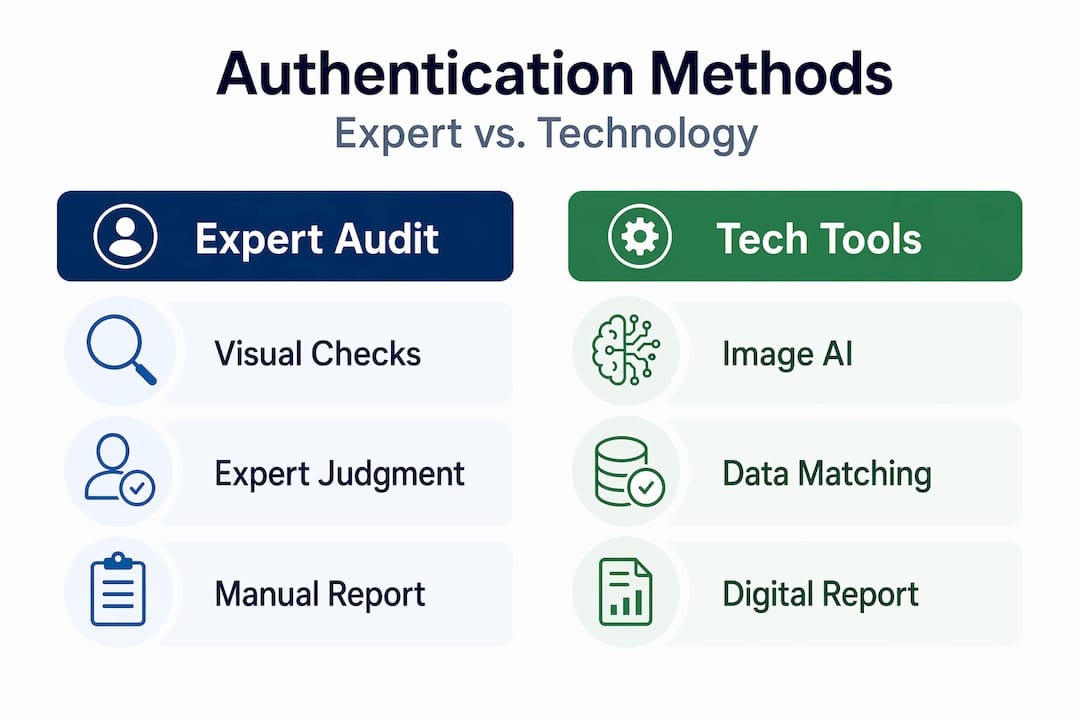
Here’s a comparison of common authentication methods and their reliability:
| Method | Who uses it | Reliability | Buyer recourse if wrong |
|---|---|---|---|
| Visual inspection only | Small resellers, generalists | Low to moderate | Usually limited |
| AI image analysis (e.g., Entrupy) | Tech-forward platforms | High for trained categories | Financial guarantee, dispute-based |
| Trained human expert | Specialty authenticators | High, if credentialed | Varies by agreement |
| Combined tech plus human | Premium resale platforms | Very high | Strongest buyer protection |
| Crowdsourced community review | Some online forums | Variable and unverified | Essentially none |
Red flags to watch for in authenticity guarantees include: no mention of who performed the authentication, certificates that only confirm “genuine” without any method detail, platforms that can’t explain their dispute resolution timeline, and listings that describe items as “brand verified” when the original brand has no involvement.
Before you buy, run through these questions:
- Who authenticated this item, and what are their credentials?
- What specific methods were used during examination?
- What exactly is covered by the guarantee, and what are the exclusions?
- How long does the dispute process take, and what documentation will I need?
- Is the certificate tied to this specific item, or is it a generic template?
These aren’t aggressive or unusual questions. Any reputable seller should answer them without hesitation. If you want to sharpen your eye further, explore how to spot authentic designer bags and deepen your knowledge with luxury item authenticity explained so you walk into every purchase with confidence.
Pro Tip: A certificate headline, whether it says “100% authentic” or “expert verified,” is just the start. Dig into the method, not just the conclusion. The best sellers welcome that level of scrutiny because they have nothing to hide.
Best practices: how to shop luxury with confidence and transparency
Now that you know how to tell strong guarantees from weak ones, let’s turn to concrete steps you can take to safeguard your luxury investment.
Start with documentation. Before any purchase, ask the seller for a full authentication report, not just a summary certificate. This report should name the authenticator, describe the examination process, and include specific observations about the item’s hardware, lining, stitching, and serial numbers. Quality assurance varies significantly, and shoppers should seek detailed explanations of the method and examiner rather than accepting a generic label.
Save everything. Email exchanges, screenshots of the listing, the certificate, the authentication report, and your payment confirmation should all be stored together. If a dispute arises weeks or months after your purchase, this documentation is your strongest asset.
Know your payment protections. Certain credit cards and payment platforms offer independent buyer protection that operates separately from the seller’s guarantee. Using a credit card with strong chargeback rights can give you a critical second layer of protection if the seller’s dispute process stalls.
Here are the top five questions to ask before committing to any luxury purchase online:
- Who is the authenticator? A named individual or a recognized technology platform carries more credibility than “our internal team.”
- What does the guarantee actually cover? Authenticity only, or also condition, accurate description, and return eligibility?
- What are the timelines for disputes? A guarantee that takes six months to pay out is much less valuable than one that resolves in two weeks.
- Is the item covered during shipping? Insurance and signature-required delivery matter, especially for high-value pieces.
- What’s the return policy if the item doesn’t match the listing? Authenticity and accurate representation are two separate issues.
For a deeper foundation, check out essential tips to spot counterfeit goods and our complete guide to authenticated pre-loved fashion to build a full picture of buyer safety. And if you’re exploring luxury accessories beyond fashion, practical advice on verified designer purchases shows how the same principles apply across categories.
Why “guaranteed authentic” is not enough and what truly matters
After covering best practices, it’s essential to shift from checklist thinking to expert-level due diligence. Here’s what most shoppers miss.
The luxury resale market has grown into a sophisticated, high-stakes industry, and the language used to sell within it has grown just as sophisticated. “Guaranteed authentic” sounds absolute. It isn’t. The guarantee is only as strong as the process behind it, the financial stability of the platform backing it, and the legal terms governing it. None of those things are visible on a certificate.
Here’s the uncomfortable truth: legal realities create cracks in even the strongest-sounding promises. As brand owners challenge reseller guarantees, platforms that use language suggesting brand affiliation or endorsement can find themselves in legal disputes even when the item they’re selling is perfectly genuine. This creates a situation where you, as the buyer, are caught between a reseller’s marketing language and the original brand’s trademark protection strategy.
That’s not hypothetical. It’s the direction the market is moving. And it reinforces one core truth: the most valuable guarantee is not the boldest headline claim. It’s the one whose method, examiner, and dispute process are fully transparent and clearly documented before you buy.
Think of it this way. A certificate that says “authentic” without naming who assessed it is the equivalent of a restaurant health inspection grade with no inspector named, no date, and no specific findings. It looks official. It may even be accurate. But it gives you no real ability to evaluate the quality of the process behind it.
When you browse for your next Prada bag, Balenciaga sneakers, or Saint Laurent wallet, ask yourself: does this seller show you their work, or just tell you the outcome? Platforms that are serious about authenticity invite your scrutiny. They publish their methods, name their authenticators, and explain their dispute timelines. That’s the standard worth trusting in online luxury shops, and it’s the standard you should hold every seller to.
Find your next authenticated designer piece with assurance
Ready to put these principles into practice? Discover a buying experience that starts and ends with trust.
At Naise Shopper, we believe that luxury shopping should feel exciting, not anxious. Our authenticated designer collections span Gucci, Chanel, Prada, Valentino, Bottega Veneta, Saint Laurent, and Balenciaga, with transparent documentation backing every piece. We don’t just tell you an item is authentic; we show you the process behind that claim.
Browse our curated collections today and shop with the confidence that comes from real transparency, not just a bold promise. Whether you’re after a classic flap bag, a statement pair of heels, or a coveted ready-to-wear piece, our personal shopper team is ready to guide you. Explore Naise Shopper and experience authenticated luxury the way it should feel: certain, secure, and effortlessly stylish.
Frequently asked questions
What does a “100% financial guarantee” actually cover?
It typically means you’ll get paid back if your item is proven fake, but the process and speed depend on the reseller’s rules and dispute mechanisms. As seen with platforms offering dispute-based financial guarantees, even agreed-upon authenticity can face legal classification challenges before a payout is issued.
Is “authenticated” the same on every website?
No. Different platforms use different methods and standards, so the reliability of “authenticated” varies widely. Because authentication is not uniform, a certificate from one platform can represent a very different level of scrutiny than one from another.
Can I trust authenticity certificates from all resellers?
Not always. Look for detailed information about how and by whom the authentication was done. Transparency in the examination method and the examiner’s credentials matter far more than the certificate’s visual design or headline claim.
Do brand authenticity guarantees mean the actual brand guarantees the item?
Usually not. Unless stated clearly, these are the reseller’s guarantees, not brand endorsements. Brand owners actively challenge reseller language that implies endorsement, which means the framing on the listing may be legally contested even if the item itself is real.
How can I make sure my purchase is truly protected?
Request transparent documentation, verify the authentication process, and know your buyer protection rights. As experts consistently note, certificate existence alone does not guarantee reliability. Documentation and method details are what truly safeguard your investment.