TL;DR:
- Most luxury buyers lack full knowledge of provenance, risking significant financial and confidence losses. Provenance in luxury fashion documents an item’s history, including origin, ownership, and certifications, which is essential for authenticity and value. Verifying provenance through official documents and digital certificates safeguards against counterfeits and enhances resale value.
A wave of TikTok videos recently sent luxury shoppers into a spiral of doubt. Creators claimed that iconic Chanel, Louis Vuitton, and Hermès bags were secretly manufactured in China, sparking widespread confusion about where designer goods actually come from. The problem? There was no evidence for such production, and the bags shown were counterfeits. This moment revealed something critical: most luxury buyers don’t fully understand provenance, and that gap in knowledge costs them real money and real confidence. This article clears up the confusion and gives you the tools to buy smarter.
Table of Contents
- What is provenance in luxury fashion?
- How provenance combats counterfeits and misinformation
- Provenance and value retention in luxury resale
- How to verify provenance for designer bags and accessories
- What most luxury buyers get wrong about provenance
- Explore trusted provenance and luxury resale
- Frequently asked questions
Key Takeaways
| Point | Details |
|---|---|
| Provenance builds trust | Documented item history helps buyers avoid counterfeit risk and enhances confidence. |
| Value retention depends on provenance | Verified provenance is central to higher resale value and investment protection. |
| Resale markets demand transparency | Major resale platforms use certificates and appraisal indices to safeguard transactions. |
| Verification is essential | Shoppers should check certificates, IDs, and QR scans to verify provenance before purchasing. |
What is provenance in luxury fashion?
Now that we’ve established how confusion arises, let’s clarify what provenance truly means in luxury fashion.
Provenance is the documented history of an item’s origin, ownership, and journey from creation to your hands. Think of it as a passport for your handbag. It tells you where the piece was made, who crafted it, how it was sold, and every owner it passed through along the way. This is not the same as authenticity, though the two are closely related.
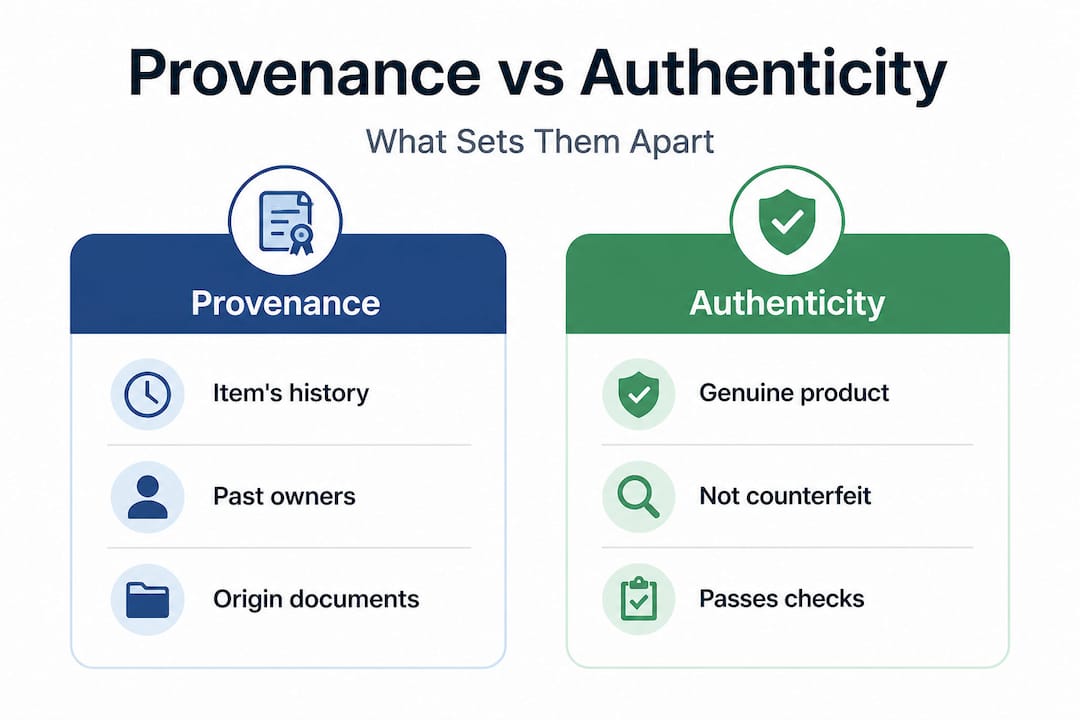
Authenticity confirms that a bag is not a fake. Provenance goes further. It gives you the full story behind the piece, which matters enormously when you’re spending thousands of dollars on a Prada tote or a Bottega Veneta clutch. Understanding bag provenance explained in detail helps you move from simply hoping a bag is real to knowing its entire history with confidence.
Here’s what strong provenance typically covers:
- Country and atelier of manufacture (e.g., Italy, France, Spain depending on the brand and product line)
- Original purchase documentation, including receipts, invoices, or boutique records
- Ownership history, especially relevant for pre-loved or vintage pieces
- Repair and service records from authorized brand service centers
- Certificates of authenticity issued by the brand or a reputable third party
- Serial numbers, date codes, and hardware stamps that match brand records
When any of these elements are missing or inconsistent, the item’s value and trustworthiness drop immediately. Provenance gaps are exactly where authenticity in luxury retail breaks down, and where counterfeiters exploit buyer uncertainty. As research shows, provenance narratives can be manipulated when listings are incomplete, making it easy for fakes to slip through.
The bottom line: provenance is your single most powerful tool for protecting your investment and buying with total confidence.
How provenance combats counterfeits and misinformation
With provenance’s definition clear, let’s explore how it protects buyers from deception and builds confidence.
Counterfeit luxury goods are a massive global problem. They don’t just look wrong up close. They are built with substandard materials, use inferior hardware, and often contain harmful chemical dyes. Beyond the physical risks, buying counterfeits is illegal and carries serious economic consequences, both for buyers who lose their investment and for the broader luxury industry.
One of the most common tricks counterfeiters use is exploiting “Made in” labeling. A bag labeled “Made in Italy” can still be a fake if the rest of its provenance is empty. Conversely, social media misinformation has convinced some buyers that certain luxury brands secretly manufacture in lower-cost countries, which is false and designed to make counterfeits seem more credible. Verified provenance cuts through this noise immediately.
Here’s a quick comparison to show how provenance changes the picture:
| Feature | Item with full provenance | Item with missing provenance |
|---|---|---|
| Origin documentation | Confirmed and traceable | Vague or absent |
| Serial number match | Verified against brand records | Unverifiable or inconsistent |
| Ownership history | Complete chain of custody | Unknown or fabricated |
| Resale confidence | High, commands premium pricing | Low, buyers hesitant |
| Counterfeit risk | Minimal | Significantly elevated |
| Investment protection | Strong | Weak |
Pro Tip: Before purchasing any pre-loved luxury piece, always request the full provenance package: original receipt, serial number, and any service records. If the seller hesitates or claims the documents are “lost,” treat that as a red flag.
Knowing how to spot the difference between a genuine piece and a convincing fake starts with spotting authentic bags using a structured approach. Using a detailed authenticity checklist alongside provenance documents gives you double protection.
“Incomplete or manipulated provenance narratives are one of the primary mechanisms through which counterfeit goods enter the luxury market undetected.”
The message is clear. Provenance is not just paperwork. It is your first and strongest line of defense against buying something that will lose value the moment you walk out the door.
Provenance and value retention in luxury resale
Understanding how provenance defeats counterfeits, let’s turn to how it boosts resale value and buyer confidence.
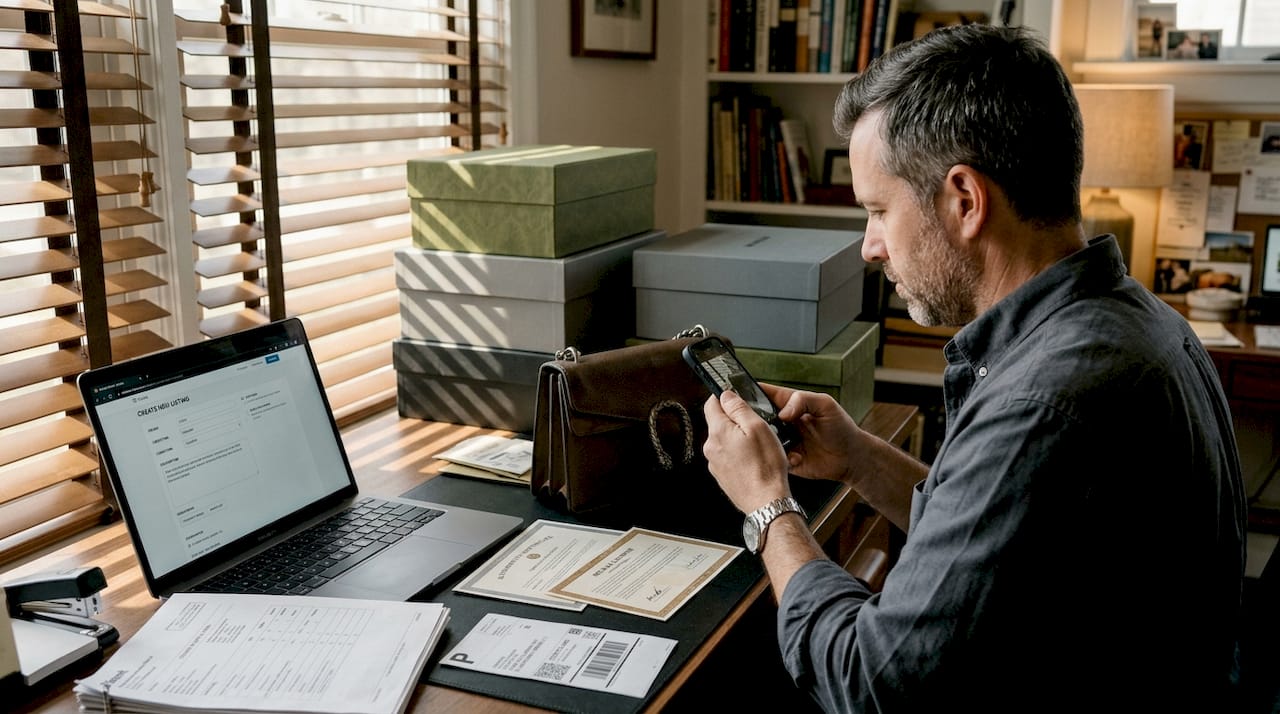
The luxury resale market has exploded in recent years, and provenance is the engine driving value in that space. Platforms like Rebag and Fashionphile have built entire ecosystems around provenance verification. They use digital certificates, unique item IDs, QR codes, and comprehensive appraisal indices to give buyers and sellers a reliable, transparent framework. Luxury resale platforms quantify value retention through these provenance confidence mechanisms, making them central to the entire resale economy.
The numbers are striking. Hermès, which maintains some of the tightest provenance standards in the industry, reaches an average 138% value retention on the resale market. That means a verified Hermès Birkin or Kelly bag can sell for more than its original retail price. Chanel and Louis Vuitton also consistently outperform the broader luxury market in resale, largely because of their rigorous documentation and serial tracking systems.
Here’s how major brands compare in terms of resale value retention:
| Brand | Average resale value retention | Key provenance factor |
|---|---|---|
| Hermès | ~138% | Strict atelier documentation, date stamps |
| Chanel | ~85-100% | Serial cards, hologram stickers, receipts |
| Louis Vuitton | ~70-85% | Date codes, monogram authenticity |
| Gucci | ~50-70% | Serial numbers, dust bags, receipts |
| Prada | ~45-65% | Authenticity cards, serial plates |
If you’re thinking about luxury as an investment, understanding luxury investing tips is essential before you spend. And getting familiar with luxury resale explained helps you understand exactly how these platforms assess and price pieces.
Here’s a step-by-step guide to checking provenance before a resale purchase:
- Request all original documents. Ask for the original receipt, authenticity card, and any brand-issued certificates. Reputable sellers will have these ready.
- Verify the serial number. Cross-check the serial or date code against known brand formats. Each brand has specific patterns, and any deviation is a warning sign.
- Check the digital certificate. Many modern resale platforms issue digital certificates via QR scan, which link directly to a unique item ID and full history.
- Confirm the ownership chain. For vintage or high-value pieces, ask for a written ownership history. Even a simple letter from a previous owner adds credibility.
- Use a trusted platform. Buying through certified luxury resale platforms removes much of the guesswork and gives you recourse if something is misrepresented.
Provenance is not just about protecting yourself from fakes. It’s about maximizing the return on your investment and knowing that the piece you buy today will hold or grow in value tomorrow.
How to verify provenance for designer bags and accessories
Now, let’s break down how you can practically check provenance and make safe luxury purchases.
Verifying provenance doesn’t have to be complicated. With the right approach, you can move through the process quickly and confidently. The key is knowing what to look for and where to look.
Here are the most important steps and signals to check:
- Original purchase receipt or invoice. This is the gold standard. A receipt from an authorized boutique confirms the item entered the market legitimately.
- Brand-issued authenticity card. Most major luxury brands include a numbered card with every new purchase. The number on the card must match the number stamped or sewn inside the bag.
- Hardware and stitching quality. Authentic luxury goods use specific hardware finishes and stitch counts per inch. These details are hard to replicate perfectly and serve as physical provenance markers.
- Dust bag and original packaging. While not definitive on their own, original dust bags, boxes, and tissue paper suggest a complete, well-maintained provenance.
- QR code or digital certificate. Increasingly, platforms and even brands themselves are issuing digital provenance certificates tied to a unique ID and QR scan, making verification instant and tamper-proof.
- Service history from authorized centers. If a bag has been repaired or cleaned, records from an authorized brand service center add credibility and show the piece has been properly maintained.
Pro Tip: Never skip the QR or digital certificate check when buying from a resale platform. These digital records are nearly impossible to fake and give you instant access to the item’s full history in seconds.
When you use an authenticated fashion guide alongside these steps, you dramatically reduce your risk. Understanding why you should authenticate designer goods before every purchase is the mindset shift that separates savvy luxury buyers from those who get burned.
Avoid listings that use vague language like “believed to be authentic” or “no papers but guaranteed real.” These phrases signal that the seller cannot support the provenance claim and you should walk away, no matter how attractive the price looks.
What most luxury buyers get wrong about provenance
After practical advice, it’s vital to consider a fresh perspective on how provenance is often misunderstood.
Here’s the uncomfortable truth: most luxury buyers focus almost entirely on the “Made in” label and stop there. They see “Made in France” on a Chanel bag and feel reassured. But that label is one small piece of the provenance puzzle, and it’s also the easiest element to fake or misrepresent.
We see this pattern repeatedly. A buyer pays a premium for a bag because the label looks right, the stitching seems clean, and the seller sounds confident. But when that buyer tries to resell the piece, the resale market asks for the full provenance package, and suddenly there’s nothing to show. The bag loses a third of its value overnight, not because it’s fake, but because its history cannot be verified.
The resale market is where provenance gets tested in the real world. Platforms like Rebag and Fashionphile don’t just look at where a bag was made. They examine every layer of its documented history, and they price accordingly. A bag with complete provenance will consistently command 20 to 40 percent more than an identical bag without documentation.
There’s also a deeper issue around how social media distorts provenance understanding. When viral videos claim that luxury brands secretly manufacture in lower-cost countries, they are not just spreading misinformation. They are actively eroding buyer confidence in legitimate provenance documentation. This is exactly the kind of manipulation that makes incomplete provenance so dangerous.
Our take: treat provenance meaning in fashion as a non-negotiable standard, not a nice-to-have bonus. Every piece you buy should come with a traceable history, full stop. If it doesn’t, either negotiate a significantly lower price that reflects the risk, or walk away and find a seller who can deliver the full picture.
The buyers who build genuinely valuable luxury collections are the ones who demand complete provenance every single time, not just when it’s convenient.
Explore trusted provenance and luxury resale
With deeper insight into provenance, discover how to shop confidently with trusted sources.
At Naise Shopper, we believe that buying luxury should feel exciting, not stressful. Every piece in our curated collection comes with verified provenance and guaranteed authenticity, so you get the thrill of owning a stunning designer piece without the anxiety of wondering if it’s real.
Whether you’re searching for a classic Gucci accessory or a statement bag from Saint Laurent, our authenticated inventory takes the guesswork out of every purchase. Looking for something with serious investment potential? The Gucci G-Timeless watch is a perfect example of a verified luxury piece that combines iconic design with proven provenance. Shop our full collection and invest in luxury with complete confidence, knowing every item has been authenticated and documented to the highest standard.
Frequently asked questions
What is the difference between provenance and authenticity in luxury fashion?
Provenance is the complete documented history of an item, while authenticity simply confirms it is not counterfeit. As research shows, provenance narratives can be manipulated when incomplete, making full provenance the stronger standard for assessing value.
Why do resale platforms rely on provenance?
Resale platforms use provenance verification, certificates, and appraisal indices to protect buyers and maximize value retention. Resale platform confidence mechanisms are central to how these ecosystems price and guarantee luxury goods.
How can I verify the provenance of a luxury handbag before buying?
Check for digital certificates, unique IDs, QR scans, and a detailed ownership history from a reputable source before purchasing. Digital certificates via unique ID are now the gold standard for instant provenance verification.
Is buying a luxury item without proven provenance risky?
Yes, incomplete provenance significantly increases the risk of purchasing counterfeits or items with uncertain origins. Incomplete or manipulated listings are the primary entry point for counterfeit goods into the luxury market.
Does provenance affect the investment value of luxury handbags?
Yes, proven provenance directly influences resale value, with brands like Hermès reaching up to 138% value retention when documentation is complete and verified.