TL;DR:
- High-end replicas can deceive casual observers but lack the quality, legality, and resale value of authentic designer bags. Experts and AI technology use specific physical and material indicators to accurately verify authenticity. Investing in genuine bags ensures better long-term value, craftsmanship, and ethical integrity.
The idea that a high-end replica is “basically the same” as an authentic designer bag is one of the most persistent myths in luxury fashion. It sounds convincing until you look closer. Mirror-quality replicas can fool a casual glance but fall apart under professional scrutiny, carry zero resale value, and come with real legal risks. Whether you’re eyeing a classic Chanel flap or a structured Prada tote, knowing exactly what separates a genuine piece from an imitation is the smartest move you can make. This guide breaks it all down, from physical details to investment value, so you can shop with total confidence.
Table of Contents
- Understanding authentic vs replica bags
- Visual and material differences: What experts check
- The technology and expertise behind authentication
- Investment, value, and resale: Authentic vs replica
- Why authentic always wins: Our perspective after years in luxury
- Ready for your next authentic luxury piece?
- Frequently asked questions
Key Takeaways
| Point | Details |
|---|---|
| Know your definitions | Authentic bags are brand-made and verified, while replicas are imitations with no resale value. |
| Spot key differences | Expert inspection reveals subtle physical, material, and quality signs distinguishing real from fake bags. |
| Authentication tools help | AI and human experts offer professional services to reliably separate authentic luxury bags from convincing replicas. |
| Authenticity means investment | Genuine bags retain or grow in value and deliver emotional satisfaction, while replicas depreciate quickly. |
| Buy from trusted sources | Choose authorized sellers and authentication services to avoid legal and financial risks from replicas. |
Understanding authentic vs replica bags
Let’s get precise about what these terms actually mean, because the fashion world throws them around loosely.
An authentic designer bag is produced directly by the brand, or under strict brand supervision, using approved materials and artisans. Every Gucci bag, every Bottega Veneta piece, every Chanel classic comes with a documented supply chain, quality control checkpoints, and a guarantee of origin. The brand’s reputation is literally stitched into every seam.
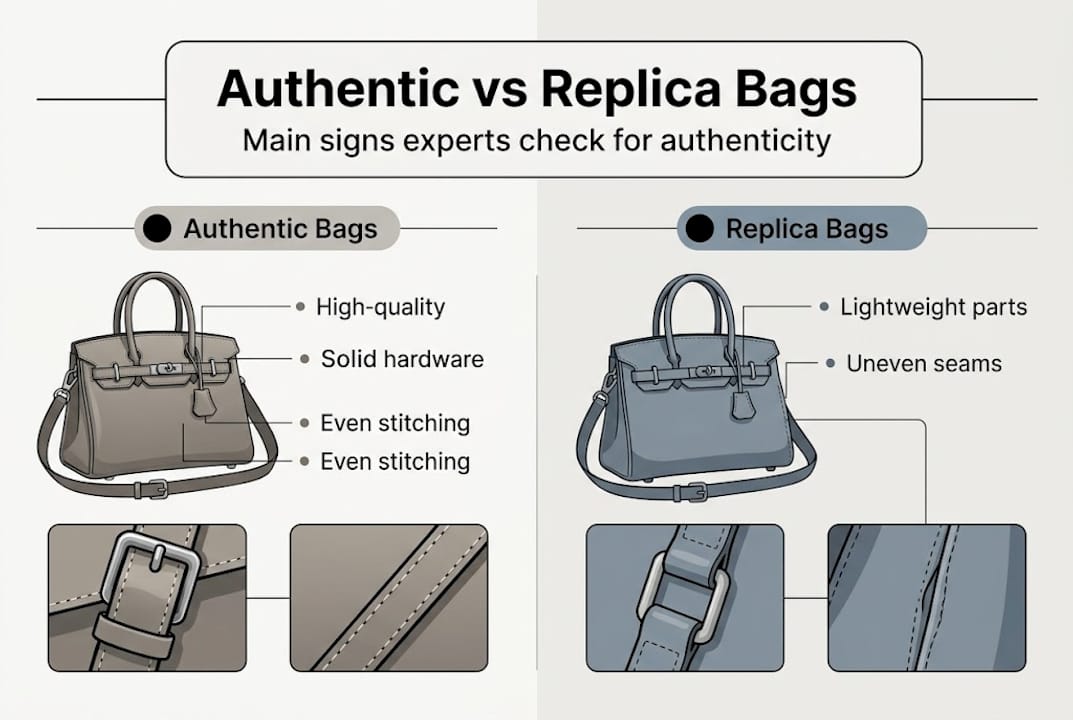
A replica (also called a counterfeit or fake) is an unauthorized imitation designed to look like a branded product without the brand’s involvement or approval. Some replicas are obvious. Others, called “superfakes” or “mirror quality” fakes, are engineered to mimic the real thing down to hardware engravings and dust bags. But no matter how convincing they look, they are still illegal imitations.
Why does this distinction matter so much? Consider the scale of the problem. Counterfeit luxury goods represent 2.3% of world trade, a staggering figure that reflects just how sophisticated and widespread the counterfeit market has become.
Here’s what separates the two at a foundational level:
- Origin: Authentic bags are made in brand-approved facilities. Replicas are produced in unauthorized factories, often with no safety or labor standards.
- Materials: Authentic bags use premium leathers, solid metals, and quality linings. Replicas cut costs at every step.
- Legality: Selling and, in many jurisdictions, even purchasing replica bags can violate trademark law.
- Value: Authentic bags hold or grow in value. Replicas depreciate immediately.
“The counterfeit market isn’t just a fashion problem, it’s a global trade issue that funds criminal networks and undermines the designers who create the work we love.”
Understanding luxury authentication explained is the first step toward making purchases you’ll never regret. Once you know what authentic really means, the differences become much easier to spot.
Visual and material differences: What experts check
With a clear sense of what “authentic” and “replica” mean, let’s explore how to physically identify each by their materials and build.
Experts don’t just look at logos. In fact, logos are often the most convincing part of a replica. The real giveaways are in the construction details most buyers never think to examine.
Hardware is one of the fastest tells. Authentic bag hardware is solid brass or palladium, deeply engraved, and smooth to the touch. Replica hardware uses lighter zinc alloys, shallow engravings, and often has rough or uneven edges. Pick up the bag. If the hardware feels light or flimsy, that’s a red flag.
Stitching is another instant indicator. Authentic bags feature even, tight stitching with consistent thread color and stitch count per inch. Replicas often show uneven spacing, loose threads, or color mismatches, especially at stress points like handles and corners.
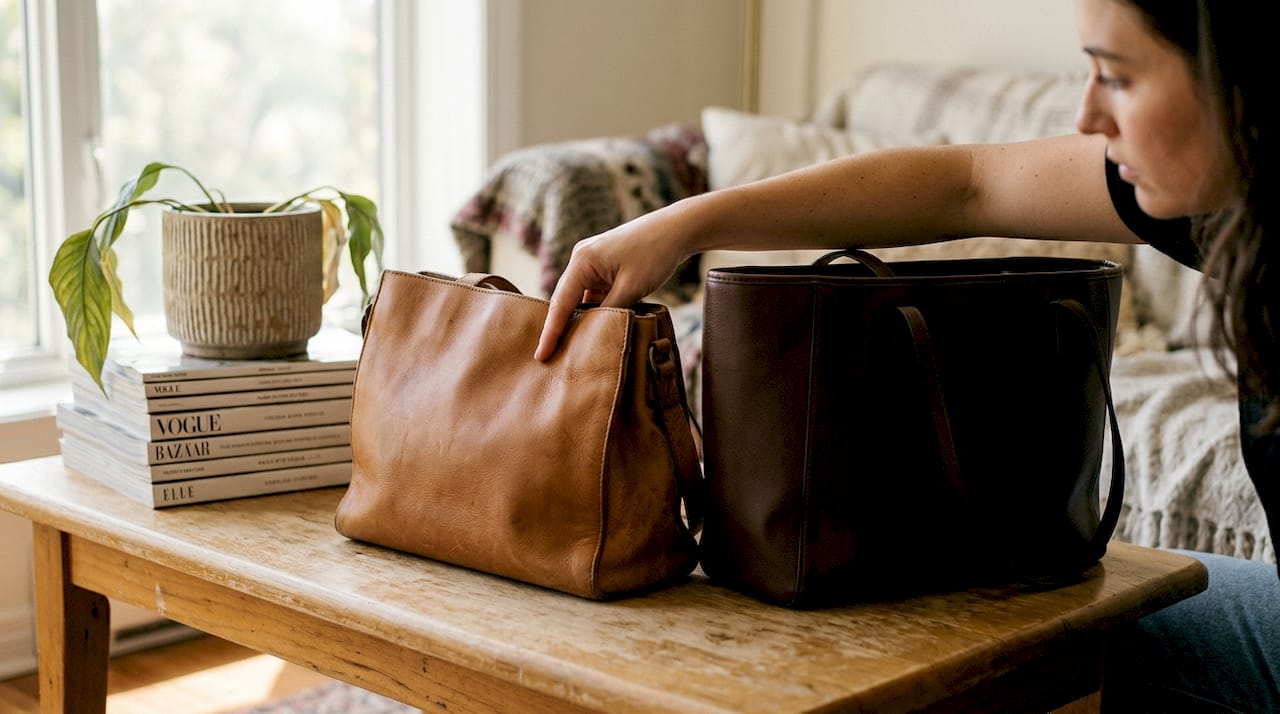
Leather quality is harder to fake than people think. Genuine leather has a distinct smell, a natural texture variation, and a supple feel that develops a patina over time. Replica leather often smells chemical, feels stiff or plasticky, and doesn’t age gracefully.
Here’s a quick comparison to keep in mind:
| Feature | Authentic bag | Replica bag |
|---|---|---|
| Hardware weight | Heavy, solid | Light, hollow |
| Engravings | Deep, precise | Shallow, uneven |
| Stitching | Uniform, tight | Irregular, loose |
| Leather feel | Supple, natural | Stiff, synthetic |
| Lining | Quality fabric, branded | Thin, unbranded |
| Serial numbers | Consistent, traceable | Inconsistent, fake |
For more detail on reading these signs, spotting authentic bags is a great resource to bookmark. You can also explore the full handbag authentication process to understand what professionals look for step by step.
Pro Tip: Skip the logo test. Instead, run your finger along the interior seams and check the edge paint on the bag’s trim. Authentic bags have smooth, even edge paint applied in multiple coats. Replicas often show cracking, bubbling, or uneven coverage within months of use.
The technology and expertise behind authentication
Once you’ve looked at the physical details, let’s see how experts and advanced technology work to catch fakes that might otherwise pass as real.
Even the sharpest human eye has limits. That’s where technology steps in. AI-powered tools have transformed the authentication industry, and the results are remarkable.
Entrupy AI authentication is one of the most respected tools in the field. Using microscopic imaging and machine learning trained on millions of data points, Entrupy achieves 99%+ accuracy in identifying authentic bags from replicas, including the most convincing superfakes. Human experts alone typically reach 80 to 90% accuracy, which sounds high until you realize that 1 in 10 fakes could slip through.
Here’s how the authentication process typically works when you bring a bag in for verification:
- Visual inspection: An expert examines hardware, stitching, materials, and serial numbers.
- UV light check: Hidden security features, like branded dust on hardware or special thread, become visible.
- Microscopic imaging: AI tools like Entrupy scan the leather’s fiber structure at a microscopic level.
- Database cross-reference: Serial numbers and date codes are checked against brand records.
- Final certification: A certificate of authenticity is issued if the bag passes all checks.
Understanding why authenticity matters goes beyond just knowing the bag is real. It affects resale value, insurance, and your peace of mind as an owner.
Pro Tip: Before buying a pre-owned designer bag from any source, request an Entrupy certificate or use the handbag authentication checklist to verify key details yourself. You can also follow the authenticity checklist for a structured seven-step review.
Investment, value, and resale: Authentic vs replica
Knowing how expert authentication works, let’s look at the real costs and lasting value when you choose authentic over replica.
This is where the conversation gets really interesting. Authentic designer bags aren’t just accessories. For many collectors, they’re assets.
The Chanel Classic Flap, for example, has seen consistent price increases year after year. Hermès Birkins regularly sell at auction for multiples of their retail price. Even more accessible luxury bags from Saint Laurent or Bottega Veneta hold strong resale value when kept in good condition.
Here’s what the value gap looks like in practice:
- Resale platforms: Major resale markets like The RealReal, Vestiaire Collective, and Fashionphile only accept authenticated pieces. A replica is simply unsellable on these platforms.
- Insurance: Authentic bags can be insured at appraised value. Replicas cannot.
- Appreciation: Limited edition and classic authentic styles often increase in value by 10 to 20% annually.
- Emotional value: Owning a genuine Prada or Gucci piece carries a confidence and satisfaction that no replica can replicate.
The advantages of authenticated bags extend well beyond the price tag. There’s also the ethical dimension. Buying replicas funds criminal networks, exploits unregulated labor, and directly harms the designers whose creativity drives the industry.
Pro Tip: If you’re shopping for a bag as an investment, check the reliable luxury bag guide to identify which styles and brands have the strongest resale track records before you buy.
Why authentic always wins: Our perspective after years in luxury
Here’s what a deep passion for luxury goods has taught us over time, and it goes beyond the technical details.
We’ve seen buyers come in convinced that a superfake was “just as good.” And honestly, we understand the appeal. The price difference is real. But after years of working with authentic designer pieces, we’ve come to believe that the gap between a replica and the real thing isn’t really about appearance at all. It’s about what the bag does over time.
Authentic bags age beautifully. The leather develops a patina. The hardware stays polished. The structure holds. A well-maintained Chanel or Bottega Veneta bag can outlast trends, outlast seasons, and become something you pass down. Replicas, by contrast, begin to show their limitations within months. The stitching loosens. The hardware tarnishes. The leather peels.
There’s also something intangible about owning the real thing. It’s confidence. It’s knowing that what you carry reflects genuine craft and heritage. That’s not something a replica can ever deliver, no matter how convincing it looks at first glance. For anyone serious about luxury, authenticating designer goods is the only path that makes sense, both financially and personally.
Ready for your next authentic luxury piece?
If you’re inspired to invest in the real thing, here’s where you can shop with total confidence.
At Naise Shopper, every piece in our collection is authenticated before it reaches you. We specialize in genuine designer handbags, shoes, and accessories from Gucci, Chanel, Prada, Balenciaga, and more, all at prices that make luxury genuinely accessible.
Whether you’re starting your collection or adding a statement piece, you’ll find authenticated options across every style. Browse classics like the Dior Black Leather Oxfords or discover bold choices like the Alexander McQueen Gray Boots. Every purchase comes with the assurance that what you’re buying is exactly what it claims to be. Shop smart, shop authentic, and shop with confidence.
Frequently asked questions
Can experts always tell replica bags from authentic ones?
Trained experts combined with AI tools like Entrupy reach 99%+ accuracy in distinguishing authentic bags from replicas, even the most convincing mirror-quality fakes.
Why do authentic bags cost so much more than replicas?
Authentic bags use superior materials and construction, from solid brass hardware to hand-stitched seams, which deliver durability, resale value, and the brand prestige replicas simply cannot offer.
Is it illegal to buy or sell replica designer bags?
Yes, in most countries selling replicas violates trademark law, and counterfeit goods are subject to seizure and fines at customs and retail levels.
Do replicas ever increase in value like authentic bags?
No. Authentic bags appreciate over time, especially limited editions and classic styles, while replicas lose value immediately and are rejected by all major resale platforms.