TL;DR:
- Luxury brands set prices based on desire and perception rather than cost, maintaining exclusivity across markets. They manage regional price differences through strategic governance, psychological anchors, and long-term brand value, considering import duties, taxes, and currency fluctuations. To succeed, brands must communicate authenticity, craftsmanship, and after-sales value, especially to younger consumers challenging traditional luxury status signals.
The global luxury pricing model is defined as a strategic framework luxury brands use to set and manage product prices across multiple international markets while preserving exclusivity, perceived value, and brand equity. Brands like Chanel, Gucci, and Prada do not price by cost-plus calculation. They price by desire. Bain & Company forecasts global personal luxury goods spending to reach €365–€373 billion in 2026, growing at 2%–4%. That number signals a market stabilizing after post-pandemic volatility, and it raises the stakes for executives who must price with precision across currencies, cultures, and consumer cohorts.
What is the global luxury pricing model and how does it work?
The global luxury pricing model governs how a brand positions its products financially in every market it enters. It is not a single price list. It is a governance architecture that accounts for import duties, local taxes, logistics costs, currency rates, and market positioning simultaneously. The goal is consistent brand perception across borders, even when the price tag reads differently in Tokyo than in Paris.

The model rests on three pillars: price integrity, regional adaptation, and psychological anchoring. Price integrity means the brand never discounts in ways that signal desperation. Regional adaptation means accepting that a Bottega Veneta bag will cost more in Seoul than in Milan due to import duties and distribution costs. Psychological anchoring means the price itself communicates status before the customer even touches the product.
Pricing decisions in this framework are long-term brand governance tools designed to preserve exclusivity and desirability over decades, not short-term profit maximization. That distinction separates luxury pricing from every other category. A mass-market brand cuts price to move inventory. A luxury brand holds price to protect identity.
How do regional market factors influence luxury pricing variations globally?
Identical luxury products regularly carry 10%–20% price differences across countries before local taxes are applied. Those gaps are not arbitrary. They reflect a structured set of cost and strategy variables that every international pricing team must manage.
The primary drivers of regional variance include:
- Import duties and tariffs: Markets like China and India impose significant import levies on luxury goods, pushing retail prices well above European levels.
- Value-added tax and sales tax: VAT rates across Europe range from 17% to 27%, while the US applies state-level sales tax with no federal equivalent.
- Logistics and distribution costs: Maintaining boutique environments, trained staff, and controlled retail atmospheres in remote markets adds real cost.
- Currency fluctuations: A weakening yen or yuan can create sudden price gaps between markets, inviting arbitrage and gray market activity.
- Local demand dynamics: High-demand markets like China and the Gulf states support premium positioning above the European base price.
Luxury brands intentionally lag currency adjustments to manage price integrity. When a local currency weakens, brands often hold prices unchanged for months. That creates temporary arbitrage windows, but it protects the brand from appearing reactive or unstable. Frequent price changes erode the perception of permanence that luxury pricing depends on.
Pro Tip: Monitor your brand’s price gap across key markets quarterly. A gap exceeding 20% before tax creates gray market incentives that undercut authorized retail channels and damage brand control.
Understanding luxury demand cycles helps executives time price adjustments to minimize disruption and protect channel integrity.
What psychological and branding principles underpin the luxury pricing model?
Luxury pricing is psychology-driven, anchored in perception, scarcity, and identity signaling rather than production cost. This is the most counterintuitive truth in luxury economics. Raising the price of a Chanel flap bag does not reduce demand. For a segment of buyers, it increases it.
The core psychological mechanisms at work are:
- Reference pricing: Consumers use the highest-priced item in a category as an anchor. Everything below it feels relatively accessible.
- Consistency bias: Buyers who have paid premium prices before feel psychologically committed to the brand’s value system. Discounting breaks that commitment.
- Loss aversion: Scarcity messaging activates fear of missing out more powerfully than any promotional offer.
- Identity signaling: The price communicates who the buyer is to others, not just what they own.
Luxury pricing filters clientele by patience, confidence, and cultural literacy, not just purchasing power. Brands deliberately raise prices to concentrate on a loyal, high-net-worth segment, using price itself as a status signal that self-selects the right customer.
Scarcity is not a marketing tactic in this model. It is a core pricing design constraint that controls availability and protects long-term price floors. Brands like Hermès limit production deliberately. That limit is built into the pricing architecture from the start, not added as a promotional layer. Minimal discounting follows the same logic. A Saint Laurent bag on sale at 40% off stops being a Saint Laurent bag in the consumer’s mind.
How are evolving consumer behaviors in 2026 impacting luxury pricing strategies?
The luxury market is reconnecting with consumers on authenticity, creativity, and relevance beyond mere status signaling. That shift is forcing pricing teams to rethink what justifies a premium in 2026. The post-pandemic era of uncritical luxury spending is over. Consumers, especially Gen Z, now scrutinize the relationship between price and value with real intensity.
Key behavioral shifts reshaping international luxury pricing include:
- Price-value scrutiny: Buyers who accepted aggressive price hikes between 2020 and 2023 are now pushing back. Brands that raised prices without a credible craftsmanship story are losing loyalty.
- Segmented pricing demand: Gen Z consumers demand segmented pricing and accessible entry-level products alongside premium lines. Brands adopting this approach maintain relevance without diluting their top tier.
- Loyalty volatility: Affluent younger consumers switch brands more readily than previous generations. Price alone no longer locks in loyalty.
- Experience over object: Buyers increasingly value the full ownership experience, including after-sales service, personalization, and brand storytelling.
The Kearney 2026 Global Luxury Outlook confirms the industry is shifting toward holistic value creation, integrating product, experience, and service to justify premium pricing. That is a structural change, not a trend cycle. Brands that treat pricing as a pure exclusivity signal without delivering on experience will face accelerating churn among their most valuable customers.
Pro Tip: Build your pricing narrative before you announce a price increase. Communicate the craftsmanship investment, material sourcing, and artisan story in advance. Consumers accept higher prices when they understand the value behind them.
Naiseshopper’s analysis of affluent shopper expectations in 2026 shows that transparency and authenticity now rank alongside brand heritage as purchase drivers.
What practical strategies can executives use to optimize luxury pricing globally?
Luxury brands must match price hikes with a credible value story including craftsmanship, material excellence, and provenance to retain consumer trust. That principle translates into five concrete execution strategies.
| Strategy | Application | Outcome |
|---|---|---|
| Price corridor management | Set a global base price with defined regional bands of ±15% | Reduces gray market risk while allowing local adaptation |
| Tiered product architecture | Introduce entry-level lines at accessible price points | Captures aspirational buyers without diluting flagship prestige |
| Currency adjustment timing | Review FX exposure quarterly and adjust prices in controlled windows | Minimizes arbitrage and protects authorized retail margins |
| Aftercare integration | Include repair services and provenance documentation in pricing | Justifies price floors and builds long-term loyalty |
| Experiential pricing | Bundle personalization, events, and exclusive access with premium SKUs | Shifts value perception from product cost to total ownership |
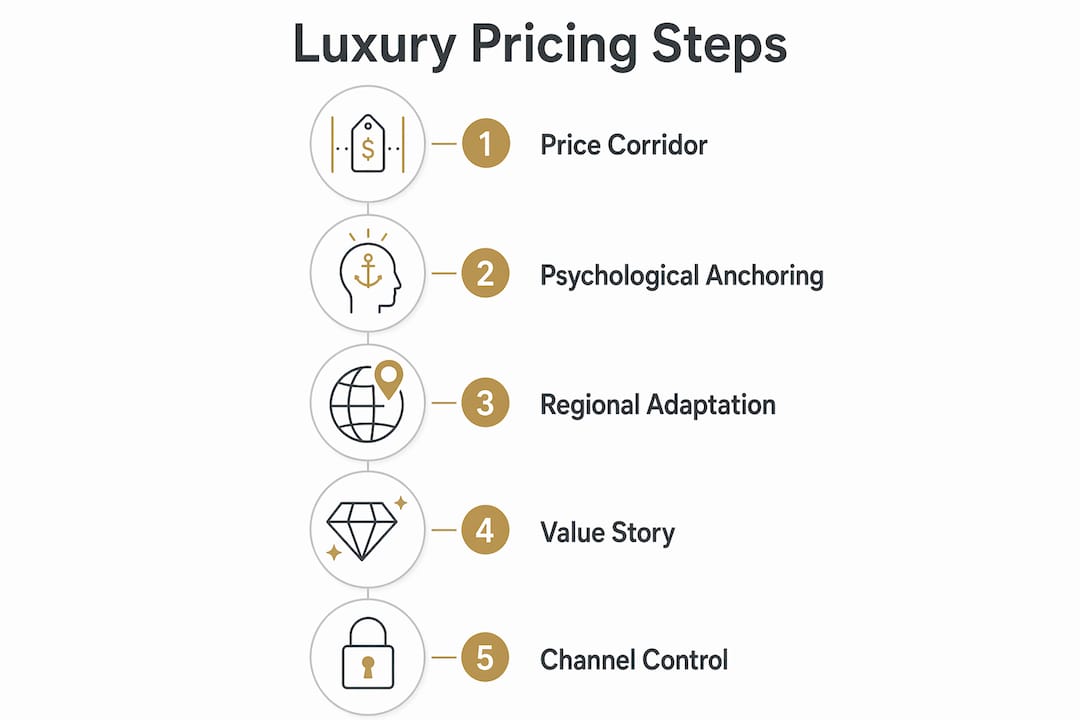
Aftercare, provenance, and supply chain control contribute to the hidden architecture of luxury prices beyond materials costs. Investment in repair services and strict production oversight justifies price floors and preserves exclusivity. Brands like Gucci and Balenciaga that offer lifetime repair programs are pricing that service into the original purchase, even when it is not itemized on the receipt.
Tight control of retail atmosphere, staff discretion, and after-sales support forms part of the comprehensive pricing justification luxury brands use. The boutique experience is not a cost center. It is a pricing asset. When executives cut service to protect margin, they remove the very elements that make the price believable.
For brands managing luxury brand segmentation, the challenge is designing entry-level products that attract new customers without signaling that the brand’s top tier is overpriced by comparison. The solution is clear product line separation with distinct naming, materials, and retail environments for each tier.
Luxury price transparency is also becoming a competitive differentiator. Brands that proactively communicate their supply chain standards and material sourcing build the trust that makes price increases defensible.
Luxury watch pricing follows similar logic. Understanding what drives luxury watch value in 2026 reveals how provenance, movement complexity, and after-sales infrastructure combine to justify prices that far exceed material cost.
Key Takeaways
The most effective global luxury pricing model combines price corridor governance, psychological anchoring, and holistic value creation to sustain brand equity and profitability across every market.
| Point | Details |
|---|---|
| Price corridor management | Set a global base with regional bands of ±15% to limit gray market risk. |
| Psychology over cost-plus | Luxury prices signal identity and status, not production expense. |
| Regional variance is structural | 10%–20% price gaps across markets reflect duties, taxes, and logistics, not margin grabs. |
| Value story before price hikes | Communicate craftsmanship and provenance before announcing increases to retain trust. |
| Segmented pricing for growth | Entry-level lines capture Gen Z buyers without diluting flagship exclusivity. |
The price is the message, not just the number
I have spent years watching luxury brands confuse price elevation with brand building. They are not the same thing. Raising a price without a credible story behind it is not prestige. It is a gamble on consumer inertia. And in 2026, that inertia is gone.
What I find most underappreciated in executive conversations about international luxury pricing is the role of after-sales infrastructure. Brands obsess over the boutique experience at point of sale, then underinvest in what happens after the customer walks out. Repair turnaround times, authentication support, and personalization services are not soft benefits. They are pricing justification. When a customer knows their Prada bag can be restored to factory condition in four weeks, the original price feels more rational, not less.
The brands winning right now are the ones treating price as a communication tool, not a revenue dial. Every price point tells the customer something about who the brand thinks they are. Get that message wrong, and no amount of heritage or runway coverage recovers the relationship.
— Camila
Naiseshopper’s resources for luxury pricing intelligence
Luxury executives need more than theory. They need current market data, consumer behavior analysis, and pricing benchmarks that reflect how real buyers respond to real price points across real markets.
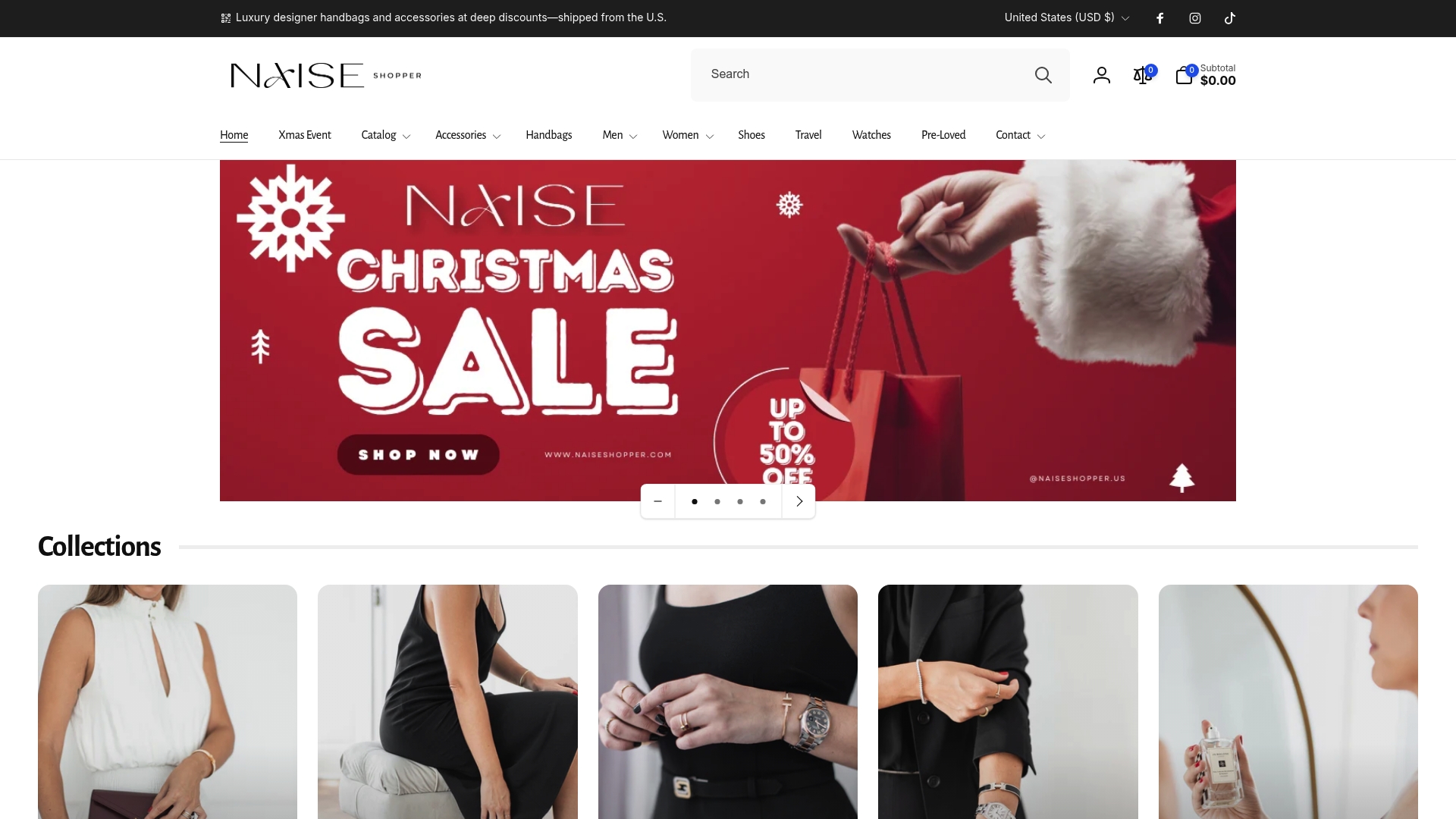
Naiseshopper tracks authenticated luxury goods pricing across Gucci, Chanel, Valentino, Bottega Veneta, and Balenciaga in real time, giving analysts a ground-level view of how premium pricing models perform at the point of purchase. The platform’s global luxury catalog covers localized pricing across dozens of countries, making it a practical reference for executives benchmarking their own pricing grids against live market conditions. Whether you are modeling regional price corridors or evaluating consumer response to entry-level product launches, Naiseshopper’s curated data gives you a concrete starting point.
FAQ
What is the global luxury pricing model?
The global luxury pricing model is a strategic framework luxury brands use to set prices across international markets while preserving exclusivity, perceived value, and brand equity. It integrates regional cost factors, psychological pricing principles, and long-term brand governance.
Why do luxury prices vary so much between countries?
Luxury brands carry 10%–20% price differences across markets due to import duties, local taxes, logistics costs, and currency rates. These variances are structural, not discretionary.
How does psychology influence luxury pricing decisions?
Luxury pricing relies on scarcity, identity signaling, and reference pricing rather than production cost. A higher price communicates status and filters buyers by cultural literacy and brand commitment, not just income.
How should brands respond to Gen Z’s pricing scrutiny?
Brands should adopt segmented pricing with clear entry-level lines and communicate a transparent value story covering craftsmanship, provenance, and after-sales service. Price increases without that narrative accelerate loyalty loss among younger affluent consumers.
What is the biggest risk in managing international luxury pricing?
Gray market arbitrage is the primary risk. When price gaps between markets exceed 20% before tax, buyers purchase in lower-priced markets and resell elsewhere, undermining authorized retail channels and brand control.